Get Full Government Meeting Transcripts, Videos, & Alerts Forever!
Get email alerts on the Healthcare Costs topic
No spam. Unsubscribe anytime.
Panel: Health‑care price growth is the largest near‑term driver of deficits; experts propose targeted reforms
Summary
Witnesses told the subcommittee that Medicaid, Medicare and employer‑subsidized health coverage are the fastest‑growing federal cost drivers; they recommended anti‑fraud auditing, price‑setting reforms and incentives for lower‑cost plans to slow budgetary pressures.
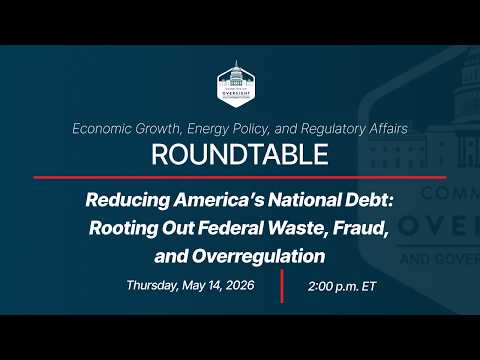
At the roundtable, members and experts repeatedly returned to health care as the single fastest‑growing federal spending category and a principal driver of the deficit outlook. Chairman Burleson and several witnesses said health‑care costs for households and the government have risen far faster than general inflation, compressing wages and impeding homeownership.
Bill Beach urged the committee to segment health‑care reform into discrete "buckets": hospitals, pricing (including Medicare price‑setting) and subsidy design. "We subsidize every insurance policy in America," Beach said, arguing subsidies are poorly targeted and can be redesigned to meet policy objectives while trimming cost growth.
Dr. Rao and other witnesses recommended several specific actions the committee could pursue: strengthen Medicaid anti‑fraud incentives and extend managed‑care audit methodologies beyond capitation formulas; consider Medicare payment reforms to slow price spillovers into the private market; and incentivize lower‑cost plans paired with health savings accounts to restore consumer price sensitivity.
Panelists emphasized that health‑care reform will not be quick or singular. Doug Holds Aiken said health care is "really complicated" and will require many annual reforms rather than a single overhaul; nevertheless, he and other witnesses argued targeted anti‑fraud enforcement could produce meaningful savings in the near term.
No formal legislation was adopted at the roundtable, but the witnesses’ technical proposals — particularly on Medicaid improper payment methodologies and Medicare price‑setting — provide a menu of options for the subcommittee’s follow‑up oversight and possible legislative drafting.