Get Full Government Meeting Transcripts, Videos, & Alerts Forever!
Get email alerts on the Literacy Implementation topic
No spam. Unsubscribe anytime.
Ossining board presses for more data as district outlines fourth year of ARC Core literacy rollout
Summary
District literacy director and ARC representatives told the board that year four of ARC Core has increased early-grade proficiency but shows middle‑grade gaps; trustees asked for disaggregated data, fidelity measures and an itemized materials cost breakdown and were promised follow-up information.
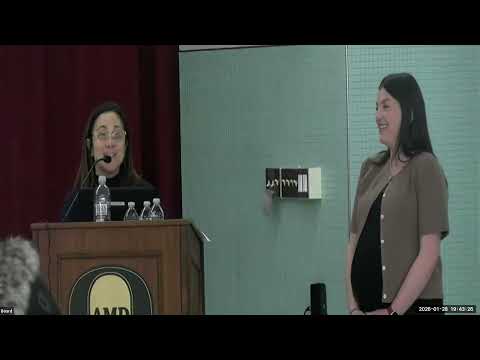
The Ossining Union Free School District on Jan. 28 heard an extended presentation on the district's fourth year of implementing the American Reading Company (ARC) Core literacy program, during which trustees repeatedly requested more granular, subgroup-level data and clearer measures of implementation fidelity.
Dr. Leila Munson, the district’s director of literacy, said the ARC Core adoption (implemented since the 2022–23 school year) is built on “science‑informed” literacy practices and a districtwide focus on tier‑1 instruction, coaching cycles and culturally responsive materials. “When instruction is culturally responsive, rigorous and aligned with science‑informed practices, students are positioned to meet high expectations,” Munson told the board.
Lawrence Ramos, ARC’s director of teaching and learning, presented national and peer‑district cohort data showing early grades with notable proficiency gains in some districts after one to three years of implementation. Ramos said classroom coaching, consistent use of program tools and leadership collaboration support fidelity, but he also acknowledged variation across grades and districts.
Board members asked for specific follow‑up materials. Trustee questions centered on: longitudinal cohort performance (including available Regents/NYS ELA evidence for high‑school cohorts), subgroup breakdowns by English learner status and IEP, quantitative indicators of classroom fidelity versus current qualitative measures, teacher and family survey summaries, and an itemized breakout of consumable and durable materials costs. One trustee noted a four‑year program spend of about $5.2 million and pressed whether year‑4 costs (roughly $800,000) would be a recurring run rate.
Munson and ARC staff agreed to produce the requested materials. “We will get that to you,” Munson said in response to repeated data requests, adding that the district is collecting midyear teacher surveys and coaching feedback that can be summarized for trustees. Ramos said ARC can supply comparison districts and example impact profiles.
Trustees also probed implementation features such as handwriting instruction, the use of independent‑reading “steps” (15 minutes = 1 step; school recommends 4 steps daily, of which 2 occur at school), and availability of authentic Spanish texts in the dual‑language program. Munson said the district is working to expand Spanish texts and to streamline professional learning as internal capacity grows.
The board did not take a vote on instructional changes at the meeting. The most immediate outcome was a commitment from the administration and ARC to return with more disaggregated data, an explicit fidelity metric proposal, teacher/community survey summaries and a per‑grade materials cost breakdown for budget planning.