Get Full Government Meeting Transcripts, Videos, & Alerts Forever!
Get email alerts on the Performance Measures topic
No spam. Unsubscribe anytime.
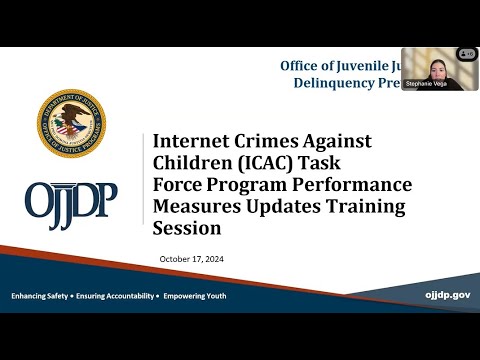
OJJDP trims ICAC performance measures to 18, tells grantees to report updated data in January 2025
Summary
OJJDP staff said they reduced the ICAC performance-measure list from 24 to 18, added several new measures (including arrests and digital forensic examinations), and instructed grantees to collect data for the July–December 2024 reporting period for submission in January 2025.
Stephanie Vega, a training and technical assistant specialist with the Office of Juvenile Justice and Delinquency Prevention(OJJDP), told ICAC grantees during a webinar that OJJDP had streamlined the programperformance measures "we've gone from 24 measures to 18 as we've removed 8 performance measures." Vega said the change is intended to make reporting simpler and more relevant to grantee work.
The change affects how task forces, training and technical assistance (TTA) providers, and technology/tool developers report outputs and outcomes in JustGrants. Vega said the updated measures will apply to the JulythroughDecember 2024 reporting period and that grantees should collect data now to report in January 2025. "The updated performance measures will be taking effect for this current July to December reporting period," she said.
OJJDP staff walked attendees through specific revisions and new items. Among the additions and clarifications Vega cited were a new count of investigations initiated and a new measure for arrests; a new digital forensic examination measure (defined as any examination of a digital storage device aided by tools such as Cellebrite or GrayKey); and an updated measure for the estimated number of suspects of technology-facilitated crimes against children identified by new tools. Vega also noted wording changes that consolidate some questions (for example, state and local referrals were combined in reporting) and the removal of some previously separate data fields.
On cyber tips and external data flows, Vega said OJJDP "does not and will not be receiving your cyber tip numbers from the National Center for Missing and Exploited Children each month." She advised grantees to direct questions about cyber-tip screening to the center or the local investigating agency.
Vega reviewed common barriers to accurate reporting—privacy rules, transient populations, limited staff or internal systems, and data-matching problems—and said programs should consider memorandums of agreement or understanding (MOAs/MOUs), parental consent forms, court orders, or shared systems where allowed. "Collecting and tracking data that contains PII should be done with considerations towards the Privacy Act of 1974," she said, adding that sensitive data should be stored with controlled access and that grantees should collect only the PII they need.
On practical steps, Vega recommended that grantees: identify which measures apply to their award; keep a copy of measure definitions and related questions; appoint staff responsible for data capture and reporting; implement simple version-control and storage practices; and, where necessary, prorate counts across awards to avoid duplicate reporting. She reminded attendees of reporting deadlinesJan. 30 for the JulytoDecember cycle and July 30 for the JanuarytoJune cycle and encouraged use of the OJJDP PMT help desk and JustGrants support for assistance.
Carla Prello, OJJDPperformance measurement coordinator, opened the session by saying the presentation reflected feedback from grantees and that the team revised measures to make them easier to report and more closely tied to program outcomes. The webinar recording, resource links and the slide deck will be posted on the OJJDP website and shared by email; staff left the webinar open for a Q&A that will not be recorded.
What happens next: grantees should review the updated definitions and questions, assign responsibilities for data collection, and ensure systems and partners are prepared to collect the revised measures in time for the January 2025 submission.