Get Full Government Meeting Transcripts, Videos, & Alerts Forever!
Get email alerts on the Land Use Development topic
No spam. Unsubscribe anytime.
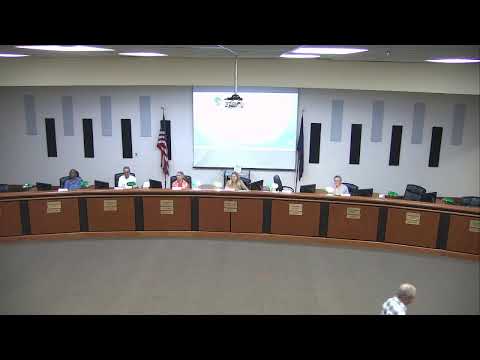
Berkeley County planners defer vote on 2,000‑acre Cane Bay Village rezoning after hours of public comment
Summary
After a full presentation from county staff and the developer, the planning commission voted to defer a decision on a proposed 2,000‑acre Cane Bay Village planned development, citing residents' concerns about traffic, flooding, lake access and enforcement of developer commitments.
The Berkeley County Planning Commission on May 1 deferred action on a multi‑parcel rezoning that would create the Cane Bay Village planned development mixed‑use village (PD MUV), a roughly 2,000‑acre assemblage near Moncks Corner that the developer says will be limited to 5,500 dwelling units.
County staff and the developer presented a development agreement and form‑based code that would govern design, infrastructure contributions and public amenities. Staff highlighted a series of developer commitments described in the draft development agreement including a $10,000,000 traffic infrastructure contribution, a $1,850 school development fee per dwelling unit and a $500 emergency‑services fee per dwelling unit; reservation and eventual conveyance of a school site to the Berkeley County School District; a 25‑foot utility corridor reservation; a proposed nature overlay intended to preserve about 20% of the site; and an initial commitment of 50 “micro” attainable housing units dispersed through the project.
Developer Ben Grambling told the commission the proposal represents a net reduction in allowable units compared with prior entitlements: “Under this new plan, we're downzoning to 5,500 units, and that is a fact,” he said. Planner Marina Khoury of DPZ, the design firm working with the applicant, presented the project’s form‑based code and design goals — walkable neighborhoods, mixed housing types, concealed parking and connected open spaces — and stressed that the PD text would regulate form and public‑realm standards rather than solely use types.
Residents in the meeting room and dozens of written speakers objected to the rezoning as presented. Speakers representing multiple Cane Bay neighborhoods and nearby communities cited traffic congestion on SC‑17A and local connector roads, doubts about whether the county or developer would deliver promised infrastructure on schedule, flooding and stormwater impacts, loss of large trees, and long‑standing disputes over access to a 300‑acre “owner's park” lake that some homeowners say has been closed for years. Tim Traynor, speaking for Four Seasons, urged the commission to require strict conditions if the project proceeds: “Require the applicant to restrict all access to the site for site preparation and construction… No construction traffic for this development be allowed through any existing, abutting residential community,” he said.
Several residents also described alleged problems with past construction in the area — clear‑cutting, damaged irrigation and silted lakes — and asked the commission to require stronger, enforceable protections such as independent engineering oversight, conservation easements for preserved tracts, lake maintenance funds and explicit limits on construction traffic and access points.
Engineers and staff answered technical questions about stormwater design and the project's transportation impact assessment (TIA). County and project engineers said stormwater detention basins are sized to accommodate a 100‑year storm and that the TIA had been coordinated with SCDOT; staff noted the TIA framework in the draft PD would require updates every five years or whenever project intensity changes.
Residents also asked whether any rezoning recommendation could be tied to the specific project and the development agreement they were shown. Staff and the applicant said the PD text and a development agreement would define allowable uses and standards; the county would review a development agreement as part of the rezoning process and the project would be subject to those regulating documents if rezoned.
After more than two hours of public comment and follow‑up questions, commissioners said more community outreach and explicit commitments were needed. A motion to defer the multi‑parcel request passed. The applicant agreed to schedule additional meetings with both Cane Bay residents and adjacent neighbors before the item returns to the commission and — if recommended — proceeds to county council for final action.
The commission did not make a final recommendation; the record will remain open to the additional outreach the commission requested.