Get Full Government Meeting Transcripts, Videos, & Alerts Forever!
Get email alerts on the Education Policy topic
No spam. Unsubscribe anytime.
Franklin County board holds first review of countywide personal device policy amid safety and enforcement questions
Summary
Board members and staff presented a first reading of a countywide personal communication device policy that would restrict phones and similar devices during instruction while allowing limited use at lunch and before dismissal; administrators raised concerns about enforcement, lockdown procedures and consistent application across schools.
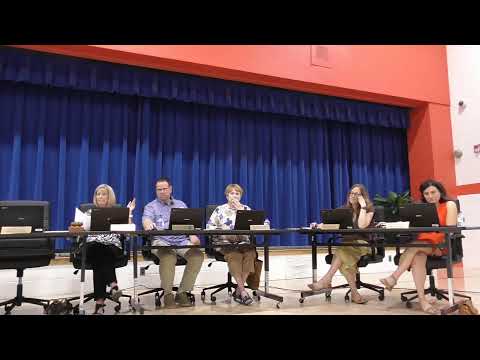
Franklin County School Board members on Monday reviewed a proposed countywide personal communication device policy designed to limit students’ use of cell phones, smartwatches and other communication devices during instructional time while permitting limited use at designated noninstructional periods such as cafeteria and before dismissal.
The policy, presented to the board as a first reading, would restrict devices in classrooms and transitions and authorize a tiered set of offenses and consequences, with some committee members saying the plan mirrors successful, more-restrictive rules piloted in other schools. "We want to focus them in on instructional time and have it very clear," said the district presenter during the discussion.
District leaders and building administrators said the intent is to adopt a consistent countywide approach so students who move between schools encounter the same expectations. Miss Butler, who led the policy overview, said the committee reviewed multiple models and recommends allowing devices at certain noninstructional times to preserve students’ ability to contact parents and maintain work schedules for high-school students. "If they need to reach out to parents, they can send that text," she said when explaining the limited lunch and pre-class allowances.
Audience members and board participants pressed for specifics on disciplinary thresholds and emergency handling. A community commenter asked why the policy would not differ between middle and high schools, noting concerns about fights and photo-sharing at higher grade levels; the committee replied that some sanctions such as loss of driving privileges would be applied at the secondary level and that harsher measures (including alternative-school referral) could be considered by the board on a later vote.
Administrators also discussed lockdown scenarios and the limitations of enforcement in active emergencies, noting that students may still reach parents during a crisis and that emergency communications with Franklin County dispatch could be overwhelmed. "In a lockdown situation…I'm not going to ask teachers to go search for a problem when we're trying to get inside and get going with academics," one administrator said, stressing the operational tradeoffs between strict enforcement and classroom time.
Board members characterized the item as a first review and invited feedback. The presentation team said the policy will be revised based on committee and community input, advertised to parents as required, and brought back for a formal vote at a later meeting.
The action taken Monday was procedural: the board recorded the first review and discussed implementation concerns; no final adoption occurred during the meeting.