Get Full Government Meeting Transcripts, Videos, & Alerts Forever!
Get email alerts on the Housing Recovery topic
No spam. Unsubscribe anytime.
Council advances disaster‑rebuild policy draft after lengthy public comment, schedules workshop to refine language
Summary
Councilmembers introduced a draft disaster‑rebuild resolution to speed like‑for‑like recovery after catastrophes; public speakers urged faster permitting and geotechnical reforms; council agreed to schedule a workshop to resolve language and implementation questions.
Councilmembers introduced a draft ‘‘disaster rebuild’’ policy aimed at streamlining post‑disaster, like‑for‑like rebuilding and memorializing practices staff and council have used during recent wildfires.
The draft resolution, explained by Councilmembers Silverstein and Conrad, would direct staff to favor application of the minimum applicable law for like‑for‑like disaster rebuilds, encourage measurable targets and timelines for plan review and approvals, create a case‑management model for rebuild applicants, and — in specified narrow circumstances — defer to a stamped and certified civil engineer when reasonable professional differences arise. Presenters and several residents said the policy is intended to remove unnecessary procedural hurdles and speed recovery for displaced families.
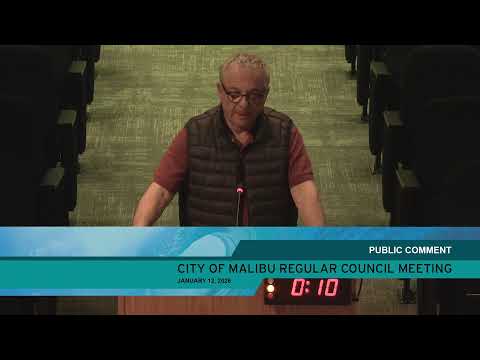
Public comment was extensive. Residents who lost homes in the Palisades fire described months of delay and financial strain; one speaker, Joe Drummond, summarized the rebuilding statistics and said, “So far, only 22 rebuild permits have been issued,” urging the council to direct staff to rely where appropriate on conservative, prescriptive engineering and to clarify review timelines. Other commenters urged protections for elderly homeowners, raised costs for seawalls and septic work, and asked the council to press the City of Los Angeles for transparent permit counts where incidents overlap jurisdictional boundaries.
Council debate focused on two technical concerns: (1) whether language that would defer to an applicant’s licensed civil engineer could be read as removing city oversight; and (2) how to avoid creating unintended liability for the city. Several councilmembers and the building official said the code and staff practice already require compliance with minimum building‑code standards and that staff must still review plans for safety. Those concerns led to requests for clearer wording on the standard of review, the gatekeeping role of the community development director, and the scope of any deference to applicant‑retained professionals.
Rather than adopt the resolution that evening, councilmembers agreed to schedule a workshop (to include staff, the new city manager and outside technical advisors as needed) to refine the draft and resolve implementation questions. Several councilmembers said the policy’s core aim — to create a playbook to avoid re‑inventing the permitting process after future disasters — remains a priority.