Get Full Government Meeting Transcripts, Videos, & Alerts Forever!
Get email alerts on the Water Infrastructure topic
No spam. Unsubscribe anytime.
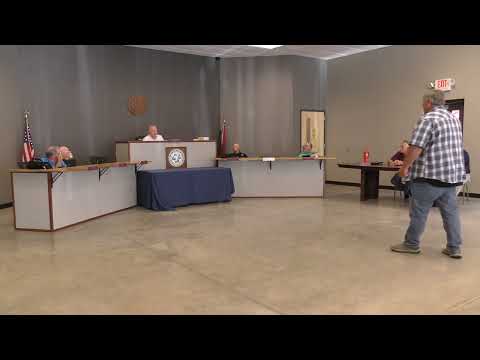
Resident Dana Tapock says billing spike exposed faulty meters; council outlines repairs as wastewater contamination probe continues
Summary
A Buckner resident described a 500% billing spike she attributes to estimated reads from meters that staff say are failing; council and public-works staff described equipment, battery and reader-tablet problems and a plan for manufacturer support while a separate lumber-related discharge at the wastewater plant is under lab analysis.
Dana Tapock, a Buckner resident, told the council her monthly water bill jumped from about $60–$70 to $335 in April after her account was put on estimated reads beginning last July. "Is this going to be fixed for this coming month?" she asked, saying she had been moved to a higher billing tier and that a code on her bill was unclear.
Tapock said the meter change left her with an unusually large, unexpected charge; she told officials she would pay what she owed but pressed for a permanent technical fix. She provided specific tiered-rate numbers from her bill and said the billing spike represented roughly a 500% increase compared with her normal usage.
City public-works staff responded that the city’s automated-meter-infrastructure is experiencing multiple failures tied to battery and reading-device problems. A public-works representative said many meters still report correctly but that roughly one-third of customer meters — about 300 units, according to staff — are not reading and have been placed on estimated billing. Staff said a handheld programming tablet used to read and program meters is not functioning and that the city is coordinating with the vendor and manufacturer to obtain a working tablet and technical support. Staff said they have met with the vender (identified in the meeting as the system seller) and plan additional vendor and manufacturer visits; crews from the manufacturer are expected to train city staff so local technicians can complete repairs.
Council members and staff discussed practical remedies: performing hard reads on batches of meters, bringing in trained crews from the manufacturer to train two new city employees, and tracking nonreading meters using a mapping tool so each red-flagged unit is investigated. Staff said a replacement tablet has been ordered to enable systematic field repairs.
Separately, city staff reported a large, recent discharge into the wastewater system traced to a lumber facility. Plant staff said samples were taken and sent to a lab to identify contaminants; early field observations indicated the discharge killed the biological organisms used in the treatment process, and staff have had to bring in replacement sludge and arrange for hauling. Plant personnel said they will seek to recover the hauling and remediation costs from the facility if the lab confirms the source. Lab results and any cost-recovery action were described as pending.
The council did not record a roll-call tally for any vote related to these discussions in the transcript. Staff said they will continue coordinating with the vendor and manufacturer, that the tablet was ordered, and that the laboratory results on the wastewater samples will determine next steps for remediation and potential cost recovery.