Get Full Government Meeting Transcripts, Videos, & Alerts Forever!
Get email alerts on the Strategic Plan topic
No spam. Unsubscribe anytime.
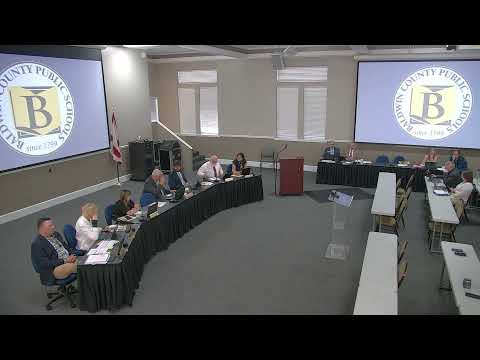
Baldwin County board hears new strategic plan tied to Cognia accreditation; members debate timing of adoption
Summary
District leaders presented a six‑year strategic plan aligned to Cognia accreditation recommendations and called for school-level plans tied to a 2032 cycle; some board members asked for more review time while staff warned a delay would compress schools’ summer planning and budget work.
District leaders presented a new districtwide strategic plan at the Baldwin County Board of Education work session on March 19, telling board members the document was developed from Cognia accreditation findings and is intended to guide schools through the district’s next accreditation cycle, which ends in 2032.
“A district plan is going to align directly to what Cognia is looking for,” a presenter said, explaining the plan’s structure — vision, priority statements, objectives, critical initiatives and year‑to‑year activities — and noting activities would be developed annually by each school. The presentation stressed four accreditation themes (culture of learning, leadership for learning, engagement and growth) plus a fifth focus on sustainability and growth.
The plan identifies specific priorities such as implementing professional learning communities (PLCs) and the MTSS framework, expanding career and technical education pathways, completing ELEOT observations to measure classroom engagement, and addressing overcrowding and retention through a local “grow‑your‑own” initiative. Presenters said schools would be expected to align their school improvement work to the district plan and that a mid‑cycle review will occur in 2029.
Several board members asked how external input — including a prior Alabama Association of School Boards (AASB) workshop and other board training — was incorporated. Presenters responded that the strategic plan is grounded in the Cognia findings but that training materials and board ideas could be cross‑referenced and embedded where appropriate. “If you have that information we can cross reference, see where they overlap or see what needs to be added,” staff said.
That answer did not end debate about timing. Multiple members requested additional time to review the plan before approving it; others urged adoption now so schools could begin writing school‑level continuous improvement plans over the summer. Staff said waiting until June would make it tight for schools to complete those summer planning sessions and for budget and activity planning tied to the approved district framework. Staff also emphasized the plan is a “living document” that can be amended after adoption.
The board did not take a final vote on the strategic plan during the work session. Staff said adoption would allow schools to begin aligning their improvement plans and budgets with district priorities; they also said specific activities and measurable action steps would be brought back to the board for vote when required.