Get Full Government Meeting Transcripts, Videos, & Alerts Forever!
Get email alerts on the Zoning Data Center topic
No spam. Unsubscribe anytime.
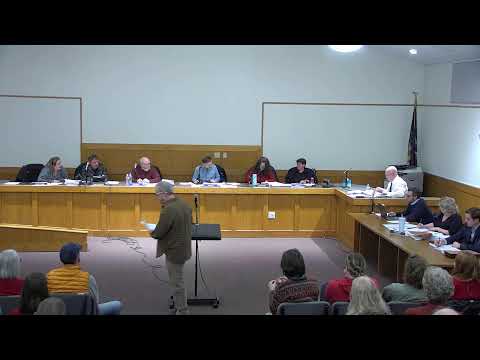
Lansing ZBA Hears Appeals Over Kaunga Data Campus; Residents Urge Upholding Code Officer Ruling
Summary
At a Dec. 16 hearing, residents, researchers and the applicant debated whether Terowolf’s proposed Kaunga data campus at 228 Kaunga Drive qualifies as a “scientific research laboratory” under Lansing’s industrial research zoning. The town’s code enforcement officer had ruled it is not; the board took public comment and will decide later.
The Lansing Zoning Board of Appeals on Dec. 16 heard appeals from Terowolf seeking reversal of a town code enforcement officer’s finding that the proposed Kaunga data campus at 228 Kaunga Drive is not a permitted scientific research laboratory in the town’s IR (industrial research) district.
Terowolf representatives told the board the campus is a modern research facility that will host high-performance computing for climate modeling, medical research, engineering simulation and other experimental work. “The Kauga data campus is a proposal to redevelop a portion of the former Kauga coal plant site into a modern research and technology campus,” said Carrie Langless, identified in the hearing as chief strategy officer of Terowolf, in prepared remarks. She said the project would use closed-loop cooling, produce no combustion emissions and operate inside low-profile buildings buffered by landscaping.
Opponents and many experts at the hearing urged the board to uphold the October ruling by the town’s code enforcement officer. The officer’s notarized affidavit, read into the record by staff, concluded that the application described “data center facilities, high compute and AI” and that section 270-8 of the town zoning code disallows uses not specifically permitted in the IR district. “Section 270-8 … disallows uses not specifically permitted,” a resident summarized while urging the board to defer, echoing the affidavit’s finding.
Most public speakers said the proposed campus functions as an infrastructure and hosting operation rather than a dedicated research laboratory. Several commenters pointed to rental and lease language disclosed in public filings and a submitted 80-year lease that refer to cryptocurrency mining and high-performance computing that will be rented to multiple clients, arguing such commercial hosting is distinct from a facility designed, staffed and contractually committed to conduct scientific research. “Once a service is rented, they will have little to no influence on what hosted services in these facilities will be used for,” said Robert Riger, a Lancing resident.
Experts who spoke included university-affiliated researchers and computational scientists who described differences between scientific laboratories and facilities that primarily provide compute infrastructure. “A company selling compute capacity is not thereby a scientific research laboratory,” said Nathan Soluroman, a computational physicist who described his experience using high-performance computing for academic research.
Terowolf CEO Paul Prager responded that the company intends the campus to support simulation, algorithm development, model training and other research activities and that long-term leases with major tenants typically align with that mission. He told the board the company would accept permit conditions, saying it could remove contractual rights (for example, to host cryptocurrency mining) if required by the permitting authority. “We would happily modify those documents to reflect that,” Prager said when asked if lease rights could be changed.
The board also discussed legal principles for interpreting zoning language: whether the board should focus on the function the buildings will perform or the industry labels applicants use. Counsel and staff reminded members that schedule tables in the zoning code and section 270-3’s definitions are central to the interpretation task.
The hearing closed after several hours of public comment; the board recessed and will take further deliberations at a later meeting before issuing a determination. No formal decision was made at the Dec. 16 session.
What happens next: The ZBA will consider the record, including the applicant’s materials, the code enforcement officer’s affidavit and the public submissions, and vote at a future meeting on whether to reverse the officer’s interpretation or uphold it. If the board finds ambiguity in the code, members may weigh case law principles about resolving zoning ambiguities in favor of property owners, but schedule language and the 2023 amendment that disallows unspecified uses will figure into deliberations.