Get Full Government Meeting Transcripts, Videos, & Alerts Forever!
Get email alerts on the Invasive Species topic
No spam. Unsubscribe anytime.
Hillsborough Tree Board member warns of invasive Japanese knotweed, urges residents to report sightings
Summary
Tim Lug of the Hillsborough Tree Board said volunteers have found Japanese knotweed in several local spots, described how to identify it and warned that improper removal can spread the plant; residents are asked to report sightings to town staff.
Tim Lug, a member of the Hillsborough Tree Board, said volunteers have begun finding Japanese knotweed in the area and urged residents to report any sightings to town staff.
"Japanese knotweed is a highly aggressive invasive species that forms dense stands, crowds out native vegetation, and can clog small waterways and drain pipes," Lug said, describing the ecological and infrastructure risks the plant poses.
The alert is intended to help residents identify knotweed, understand its impacts and prompt early reporting. Lug said volunteers are currently treating large infestations along Belleview Branch, on Hay Street and in the sewer easement near the downtown parking deck, and that small populations have been located along the Eno River.
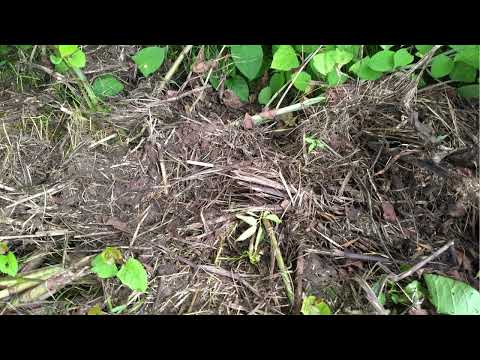
Lug described identification features that distinguish knotweed: "It has smooth hollow stems and semi‑triangular leaves arranged alternately along zigzag stems and branches. It can reach up to 10 ft high. Small white flowers grow in spikes from summer to early fall." He also warned that the plant is difficult to eradicate: "It's nearly impossible to remove knotweed from the soil due to its extensive roots which can grow up to 30 ft laterally, 10 ft deep."
Because fragments of root or stem can start new colonies, Lug said mowing or digging up knotweed is strongly discouraged; those activities risk spreading the plant rather than eliminating it. He explained knotweed spreads easily when fragments are dispersed by flooding, erosion or other soil disturbances.
Residents who find knotweed on their property or elsewhere in town were asked to report it to Lindsy Rue at the town address provided in the announcement. "Tree Board volunteers will then contact property owners to discuss treatment options," Lug said.
Lug closed by stressing that early detection and rapid response are key to keeping knotweed from spreading throughout the Eno watershed and degrading local ecosystems. The Tree Board is coordinating volunteer treatment and follow‑up with property owners but did not announce specific chemical or mechanical treatment protocols in this announcement.