Get Full Government Meeting Transcripts, Videos, & Alerts Forever!
Get email alerts on the Water Supply topic
No spam. Unsubscribe anytime.
Bridgewater advances water-capacity ordinance as temporary treatment units move toward installation
Summary
Councilors advanced a proposed ordinance tying building-permit approvals to the town—irm water capacity and heard DPW staff say enclosed treatment units and a Middleborough interconnection will help restore permitted supply while further studies continue.
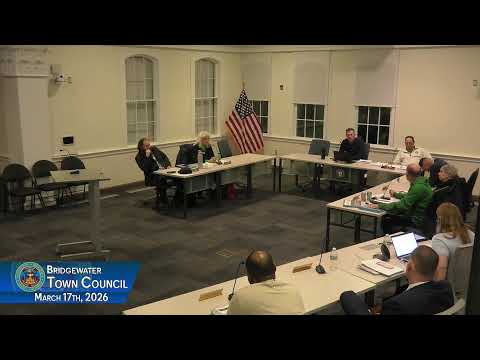
The Bridgewater Town Council moved this week to develop a formal water-supply capacity review to govern future permitting as the town continues to manage an ongoing water emergency.
The proposal, drafted by Councilors Johnny Kennedy and Paul Loretti, would anchor permitting to the town—irm capacity efined as the system ay-to-day operating output minus the loss of the single largest well nd require water-impact studies for new developments that approach that ceiling. The measure was referred to the council—ommittee on rules for further review.
Why it matters: Council members said the ordinance is designed to provide a defensible, legally grounded limit on approvals rather than a blunt moratorium that could jeopardize grants or be vulnerable to challenge. If adopted, the rule would force a formal engineering review early in the review process and give town staff and the planning board a clear, measurable trigger for requiring mitigation or modified project expectations.
The DPW report to the council described near-term steps to restore capacity. The town has relied on a Middleborough interconnection for emergency supply and, according to staff, has received more than 20 million gallons from that source so far. DPW staff reported plans to redevelop well six (returning it to service shortly), to bid out treatment work at wells 10A and 10B, and to install enclosed treatment "units" (previously described as trailers) at sites where they will act as longer-term treatment facilities.
"It's a chemistry issue," the DPW director said when councilors asked whether the High Street treatment plant is capable of handling water from other wells. The director explained that water quality varies by well and that certain wells would introduce constituents (including PFAS) that the current plant is not designed to treat. The plan, he said, is to place purpose-built units at sites like 10A/10B, enclose them and operate them as engineered treatment facilities.
Town leaders also said they are pursuing a coordinated schedule so that flushing, well redevelopment and unit installation align with contractor availability to maximize system yield.
What comes next: The ordinance was referred to the rules committee for drafting refinements and legal review. DPW staff expect to return with cost estimates and a construction/timing plan for the treatment units after bid close and contractor selection. Councilors emphasized the need to preserve any grant eligibility while protecting public supply.
The meeting closed with repeated public appeals for clarity and speed; residents urged the town to publish performance metrics and timelines. Town staff said they intend to publish an online dashboard of water updates and to provide a sequence of benchmarks as treatment and well work proceed.