Get Full Government Meeting Transcripts, Videos, & Alerts Forever!
Get email alerts on the Vacant Property topic
No spam. Unsubscribe anytime.
Council approves no-cost technical-assistance MOU with national nonprofit
Summary
The council authorized the mayor to sign a five-page memorandum with the Center for Community Progress to deliver up to 300 hours of Walton-funded technical assistance on vacant, abandoned and deteriorated properties in Pine Bluff; council members clarified dates and legal limits on land-banking authority in Arkansas.
The Pine Bluff City Council voted to authorize a memorandum of understanding with the Center for Community Progress, a national nonprofit offering up to 300 hours of technical assistance (funded through the Walton Family Foundation) to review local policies for vacant, abandoned and deteriorated properties.
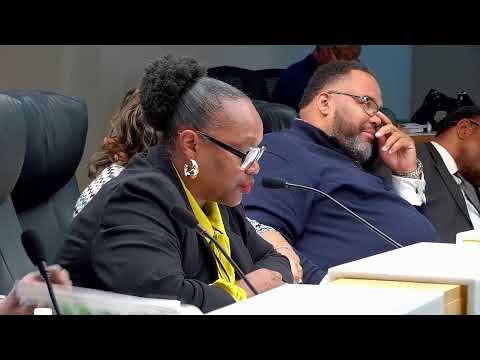
Sarah Tori, a senior fellow for the Center, told the council the engagement would involve a multi-month, stakeholder-driven review of local ordinances, code-enforcement practices, and potential acquisition strategies. "We are offering this as a scholarship to the city of Pine Bluff," she said, explaining that the foundation funding means the technical assistance would be provided at no cost to the city.
Council members asked detailed questions about the draft timeline and whether the project presumes state enabling legislation for land banking (it does not). Tori said the work would include legal review and close coordination with the city attorney to ensure recommendations respected Arkansas law.
Before the council adopted the resolution authorizing the mayor to execute the five-page MOU, members sought and received assurances that clerical errors in the draft (incorrect dates) would be corrected before any final signature. The city attorney then read the resolution and the council adopted it by voice vote without recorded opposition.
The engagement is intended to produce concrete, community-centered recommendations that could include data tools, ordinance revisions, and options for property-acquisition strategies; it does not itself establish any land-bank entity or change local law without further council action.