Get Full Government Meeting Transcripts, Videos, & Alerts Forever!
Get email alerts on the Budget topic
No spam. Unsubscribe anytime.
Williamsburg officials lay out FY27 budget plan with $20M library bond, 14 new staff and proposed 7% water increase
Summary
Interim City Manager Mr. Whit presented the FY27 proposed budget April 6: no real‑estate tax rate change, a proposed 7% water rate increase, 14 new full‑time positions, and a capital plan built around a proposed $20 million bond for a downtown library; the session included significant public concern about alleged prior CIP reallocation and prompted follow‑up requests for financial review.
The Williamsburg City Council on April 6 heard an overview of the interim FY27 proposed budget that keeps the city's real‑estate tax rate flat at $0.62 per $100 of assessed value while proposing a 7% increase in water rates and the addition of 14 full‑time equivalent posts.
Mr. Whit, presenting the budget, said the preliminary package totals about $121 million — a 17% increase from the prior year driven largely by a proposed $20 million bond issuance for a downtown library and related capital projects. "There is no proposed real estate tax rate increase. It's a a flat rate of 62 cents," Mr. Whit told council members as he summarized revenue and cost drivers, including a projected $1.8 million increase in the city's share of school costs under a new school funding contract.
Why it matters: the proposed CIP embeds a major capital decision — whether to borrow for and build a new downtown library — and several operational tradeoffs. The library project in the CIP assumes $20 million of bond financing in FY27 with approximately $6 million in furniture, fixtures and equipment expected in FY28, increasing the project to an estimated $26 million, and staff noted additional contingencies could raise the total further.
Council members questioned the staffing requests that accompany the budget. The proposal includes 14 new FTEs (13 in the general fund, one in the utility fund) spread across police, fire/EMS, public works, parks and communications. Police Chief Dunn described a multi‑year request for six new officers intended to raise minimum patrol staffing from four to five officers per shift. "Our minimal staffing is four... that's a very small number for a city of our size," Chief Dunn said, urging that additional officers would reduce mandatory overtime and improve coverage during peak town‑gown periods.
Fire and EMS leaders said three of six requested positions are funded in the proposal and would permit a shift minimum staffing increase to 11 personnel, allow the department to end cross‑staffing of ladder and medic units, and reduce reliance on mutual aid for simultaneous calls. Battalion Chief Sierra Fensky said the department has seen rising patient acuity and more advanced on‑scene procedures that increase training and supervisory needs.
On capital work, Mr. Whit flagged Lafayette Street reconstruction (a multi‑year VDOT partnership with a city share of roughly $1.37 million for the additional costs beyond the grant), ongoing historic‑street maintenance, and the Quarter Path Recreation Center's HVAC replacement (noted as an important unfunded item because the facility is the city's emergency shelter). The regional bus authority (WATA) has requested a roughly $342,000 increase in member contributions to raise service frequency; staff said neighboring counties are prepared to include the increase in their budgets this year where they had not the prior year.
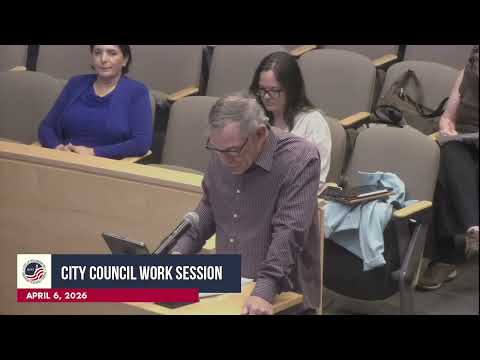
Public comment at the start of the meeting focused heavily on budget process concerns. Resident Robert Wilson alleged repeated, unapproved reallocation of CIP funds since FY2025 and urged the council to investigate; he named line items including municipal building renovations, a $4 million library carryover line and HTFRA/amphitheater funds that he says were redirected without supplemental appropriations. Councilmembers asked staff to provide clarifying details and to ensure the finance department reviews prior appropriations and carryovers.
What happens next: the council has scheduled public hearings and additional budget meetings in April and May. Staff advised that the full proposed budget and interactive balancing‑tool are online, and that further public input opportunities are available before the city adopts the FY27 budget.