Get Full Government Meeting Transcripts, Videos, & Alerts Forever!
Get email alerts on the Automated Enforcement topic
No spam. Unsubscribe anytime.
Titusville police report 60‑day warning period for school‑zone cameras; council hears data, residents voice concern
Summary
Titusville police presented 60‑day results from an automated school‑zone speed enforcement pilot—reporting roughly 16,000 events and about 14,000 warnings—and described a 29% drop in 11+ mph violations; councilors pressed staff on phasing, sign/flashers, costs and appeals while residents questioned effectiveness and fairness.
Titusville police told the City Council on May 26 that an automated school‑zone speed enforcement pilot generated roughly 16,000 speed events during a 60‑day warning period and that staff issued about 14,000 warning notices while officers manually reviewed marginal cases before any citation was mailed. Major Jeremy Gonzalez, who led the project, said the camera system flags vehicles traveling 11 miles per hour or more over posted limits and that the vendor and department perform verification checks before warnings or citations are issued.
The police presentation framed the program as an evidence‑based effort to change driver behavior and reduce pedestrian injury risk. Gonzalez cited Florida Department of Transportation data showing Titusville ranks poorly among similarly sized cities for crash risk and cited federally published crash‑severity data to explain why lower speeds matter for pedestrian survival. He reported an estimated 29% drop in 11+ mph violations from March to April during the warning phase and said early speed studies showed large initial reductions after enforcement began. Gonzalez acknowledged anomalies in the dataset — for example, Sycamore Street produced a disproportionate number of events when flashing lights at that location were not operating — and said staff corrected signage and flasher issues when identified.
Councilors asked detailed questions about rollout, timing and transparency. Member Stokel pressed whether all school zones would be phased in come fall; staff said several remaining locations (South Lake Elementary, Park Avenue/Apollo zones, Oak Park, Madison and Imperial/Cison Road) are targeted for the beginning of the school year after permitting and visibility fixes, each with a 60‑day warning phase. The department said most cameras will be turned off during summer because few schools run regular schedules then.
On appeals and accuracy, staff described a verification workflow: the vendor pre‑processes images, then officers check whether the event fell during a reduced‑speed window, confirm the license tag and school schedule, and then approve or reject the notice. Gonzalez said the mailed notice process generally occurs within 30 days and that officers are manually reviewing queued events (he said roughly 900 events were awaiting his review at one point) to reduce false positives.
Councilors also pressed on enforcement philosophy. Some members said a long warning period risked being treated lightly; staff responded that the warning period aims to build public awareness but conceded that behavior change typically requires consistent enforcement. Gonzalez recounted social‑media examples of drivers treating warnings as a game and suggested penalties that create ‘‘real‑world jeopardy’’ — noting that a uniform traffic citation for a police‑issued stop can carry points and affect insurance, while the automated program's administrative process as described in the presentation is structured differently.
The presentation included financial details: staff said cameras are leased at $3,500 per camera per month, and that the vendor is paid first each month; after vendor costs are covered, the remaining funds from citations are returned to local public‑safety purposes (subject to state rules restricting certain uses). Gonzalez said the automated citation in this program is $100, without points attached as described by staff, and that unpaid balances may convert into a UTC (uniform traffic citation) and affect vehicle registration holds.
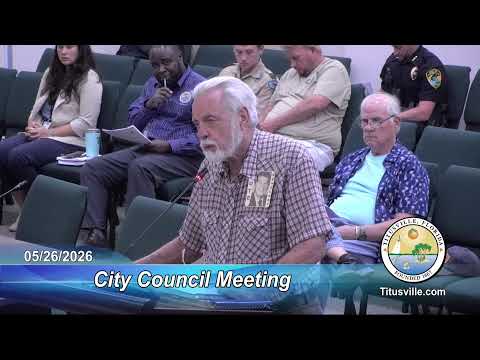
Residents used the public comment period to challenge the program's fairness and effectiveness. Miss Shifila said mailed warnings weeks after driving do not change her on‑the‑ground behavior and expressed frustration at inconsistent school‑zone times across nearby schools, saying the program was perceived by some residents as a ‘‘money grab.’’ Gonzalez acknowledged that community concerns exist and said staff tracked complaints, corrected signage and made efforts at transparency.
City staff said they will continue to collect data and work with the vendor to produce additional breakdowns — for example, comparing events that occurred during blinking‑light flasher windows versus the broader school‑day enforcement windows — and to refine signage and timing so enforcement aligns with community expectations. The council took no formal action at the meeting; staff said they will continue outreach, data analysis and equipment adjustments ahead of the planned fall phase‑in.