Get Full Government Meeting Transcripts, Videos, & Alerts Forever!
Get email alerts on the Transportation Infrastructure topic
No spam. Unsubscribe anytime.
Residents press city for more data on Coyote Street traffic as courthouse and highway projects loom
Summary
City engineer reported current Coyote Street peak flows (~100 vehicles/hour) and speeds (23–29 mph); residents and council pressed for more counts, vehicle‑type data, and pilot traffic management trials because upcoming projects (multimodal corridor, Hwy 20/49 intersection, and courthouse EIR) could displace traffic into neighborhoods.
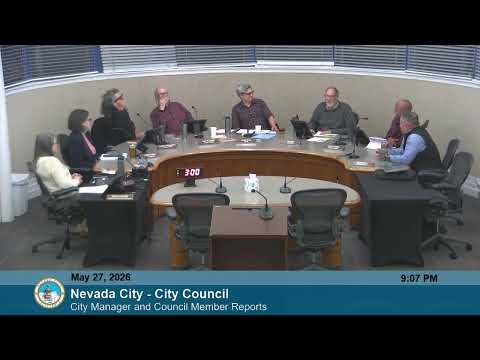
The Nevada City Council received an update May 27 on traffic conditions on Coyote Street and heard multiple residents urge more study and temporary pilots to avoid shifting traffic into nearby neighborhoods.
City Engineer Brian Mallister summarized traffic work: Coyote Street functions as a collector parallel to Highway 49, with an observed peak‑hour volume around 100 vehicles and speeds ranging from about 23 to 29 mph. Mallister noted three major projects that will affect the corridor — the multimodal corridor improvement project, a Highway 20/49 intersection project, and the courthouse project currently in early environmental review (EIR) — and said staff will request those EIRs consider Coyote Street impacts.
Residents described the corridor as narrow with front yards close to the pavement and warned that mitigation on Coyote could "squeeze the balloon," moving cut‑through traffic into other neighborhoods. "We absolutely have to understand the impact of the courthouse 49 and 20 and who pays for mitigation," one neighborhood speaker said.
Council and staff agreed on the need for more current, local data: additional counts, truck/vehicle type breakdowns, pedestrian and bicycle counts, and the possibility of temporary, low‑cost pilot traffic management measures to test impacts before permanent changes are adopted. Staff said they had already asked the courthouse EIR preparer during notice‑of‑preparation steps to study Coyote Street and that the EIR process (about six to nine months) should produce more work; staff also said the city may seek to fund or augment studies if the EIR scope is insufficient.
What’s next: Staff will secure additional traffic counts, pursue EIR studies that include Coyote Street, and explore temporary pilots to measure neighborhood impacts before adopting permanent traffic management measures.