Get Full Government Meeting Transcripts, Videos, & Alerts Forever!
Get email alerts on the Municipal Budget topic
No spam. Unsubscribe anytime.
Nevada City unveils FY2026–27 budget plan; water and sewer funds show deficits
Summary
Council heard a detailed FY2026–27 budget presentation showing water and sewer enterprise deficits (about $289,000 and $184,971 respectively), a ~$3.5M CIP program, and staff recommendations for targeted fee updates and potential midyear adjustments to close general‑fund gaps.
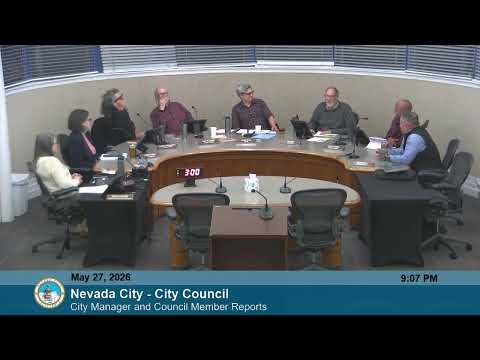
City staff presented the proposed FY2026–27 budget at the May 27 Nevada City Council meeting and highlighted several immediate fiscal pressures: the water enterprise is projected to run a deficit of roughly $289,000 and the sewer enterprise a deficit of about $184,971. The proposed capital improvement program (CIP) totals just over $3.5 million, with general‑fund CIP projects of approximately $235,000.
Finance Manager Britney Nundorfer and Program Manager Stephen Earlson walked council through revenue assumptions and expenditure drivers, noting conservative revenue projections (small increases in property and sales taxes) and rising operating costs. Staff cited a forthcoming 3% cost‑of‑living adjustment (COLA) for bargaining units effective July 1, 2026, an estimated 10% rise in health‑benefit costs effective January 2027, and a 15.2% increase in the CalPERS unfunded actuarial liability payment (with a 5% prepayment saving opportunity).
"We are being conservative in our revenue assumptions while acknowledging utility and materials costs have increased," the city manager said. Staff proposed keeping three positions unfunded at adoption (police officer vacancy; operator/training vacancy; admin services manager/deputy city clerk) as a near‑term measure to balance the budget; council members stressed that deferring hiring reduces service capacity.
Staff recommended a targeted approach to fee adjustments — rather than a blanket increase — to ensure fairness and preserve economic activity. Specific examples discussed included potential new or adjusted fees for fats/oils/grease inspections for food establishments (to protect wastewater systems) and special‑event parking fees.
What’s next: Council set a public hearing and is expected to consider the budget further; staff warned a significant midyear adjustment is likely as revenue and expenditure assumptions are refined.