Get Full Government Meeting Transcripts, Videos, & Alerts Forever!
Get email alerts on the Surveillance And Privacy topic
No spam. Unsubscribe anytime.
Residents urge Nevada City to cut ties with Flock surveillance; council asks staff for review
Summary
Multiple public commenters urged the council to terminate Flock/ALPR contracts and remove persistent license‑plate‑reader surveillance, citing privacy, mission‑creep and data‑sharing concerns; council asked staff to prepare a review and alternatives within about 60 days.
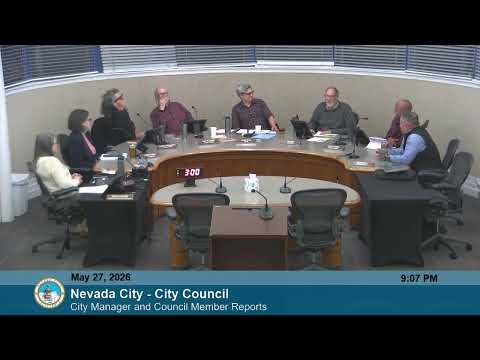
Public commenters at the Nevada City Council’s May 27 meeting urged the city to end contracts with "Flock" automatic license‑plate reader systems and remove related surveillance equipment, arguing the cameras amount to 24/7, AI‑enabled tracking that threatens privacy and invites mission creep.
"This is 24/7 dragnet‑style monitoring that poses a threat to the privacy of every citizen of Nevada County," said video systems engineer Tony Kaiser during the public‑comment period, arguing that the devices are high‑resolution, cloud‑connected cameras whose data can be harvested and repurposed beyond law‑enforcement uses. "Powerful tools such as these require powerful oversight. Narrowly tailored warrants, judicial approval — not sending movements to a multi‑billion‑dollar data broker in another state." (Tony Kaiser)
Other speakers recounted national public‑records findings and local concerns. "A company that cannot consistently uphold its own assurances should not be entrusted with infrastructure capable of monitoring daily movements of innocent people," said Jason, a frequent commentator. Several speakers warned of "mission creep," arguing that searchable historical records of vehicle movements become harder to roll back once established.
Council members acknowledged the volume and technical detail of commenters’ concerns. During reports, Mayor Klein and Chief Dan Foss asked staff to prepare a thorough review of the city’s Flock‑related contracts and alternative options, with a goal of returning to the full council in roughly 60 days for a thoughtful analysis and possible next steps. The request was framed as a staff assignment rather than an immediate policy action.
Council did not take any formal action to cancel contracts at the May 27 meeting. Staff did not provide contract termination timelines, costs, or legal constraints at the meeting; those specifics were requested as part of the forthcoming report.
What’s next: Council directed staff to return a full analysis of the city’s surveillance contracts, the operational value to law enforcement, data‑access and retention practices, and alternatives that could meet public‑safety needs while addressing privacy concerns. That report is expected to be scheduled within approximately 60 days for council consideration.