Get Full Government Meeting Transcripts, Videos, & Alerts Forever!
Get email alerts on the Development Ordinance Updates topic
No spam. Unsubscribe anytime.
Stokesdale planning board recommends technical fixes and sign-rule changes in development ordinance
Summary
On Oct. 23, 2025, the Stokesdale Town Planning Board voted to recommend a set of technical corrections and policy edits to the town's development ordinance — including sign-regulation changes to align with recent U.S. Supreme Court rulings and proposed shifts in certain site-plan reviews from the board to staff — and will forward the recommendation to the Town Council for final action.
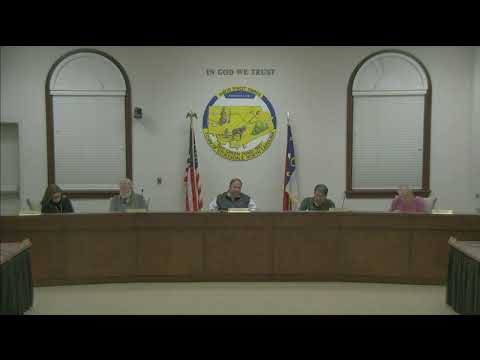
The Stokesdale Town Planning Board on Oct. 23, 2025 recommended that the Town Council adopt a package of corrections and policy updates to the town's Unified Development Ordinance addressing textual errors, sign regulations and several procedural changes.
The board opened a public hearing on proposed revisions and then spent the meeting reviewing the draft, which the planner presented as three groups: "patent errors" (copy-edit and obsolete-name fixes), changes needed to conform with state law and court rulings, and recommendations from the county review committee (PTRC). The planner said the items marked as patent errors include updating an airport name and several statutory references, correcting a paragraph in section 3-13.4 for logical flow, and replacing an obsolete agency name in section 4.53. He said prior planning-board recommendations already forwarded to council will become effective Jan. 1, 2026.
The package contains substantive policy edits prompted by recent U.S. Supreme Court decisions about content-based speech restrictions. The planner told the board that the proposed edits remove certain exemptions from the sign code — including exemptions for government signs and works of art described as containing "no commercial message" — because the Court has limited content- or speaker-based distinctions. He explained that removing those exemptions would likely leave some existing signs as nonconforming (grandfathered) but could cause loss of grandfathering if a sign is later modified or destroyed.
Board members also discussed procedural reforms that would move some site-plan review authority from the planning board to staff and the technical review committee (TRC) to reduce application delays. Board members raised concerns that delegating reviews to staff would reduce the planning board's oversight role and could make it harder for neighbors to notice or appeal staff decisions; others said routing more reviews through staff could cut repeated trips for applicants and avoid permitting bottlenecks.
Members debated several definitional and threshold changes: proposed edits to the definition of "building" (removing a requirement that a structure have a roof), a clarified definition of "dwelling unit" describing a unit with independent living facilities, and thresholds that would make a project a "major site plan" (the draft cites 15,000 square feet of floor area and 40,000 square feet for certain site thresholds). The planner said pre-application conferences would be recommended rather than required.
The board prepared a consolidated motion recommending the planner's and PTRC's proposed changes to the Town Council, including a list of lettered items in the draft (C, G, K, L, M, N, S, T, CC, D, E) and a change replacing the term "conditional use" with "conditional zoning." The motion was seconded and the planning board indicated it would forward the recommendation to the Town Council, which has final authority.
The meeting closed with announcements that the Town Council will meet Nov. 13 and the Planning Board will next meet Nov. 20, 2025, and a motion to adjourn was approved by voice.
What happens next: The Town Council will receive the planning board's recommendation and may accept, modify or reject the package when it considers the ordinance revisions at a future meeting. The planning board's recommendation does not by itself change the ordinance.
Quotes in context
"The Stokesdale Town Planning Board will make a recommendation to the Stokesdale Town Council, which will have the final authority to approve or deny the proposed changes," the chairman said at the start of the public-hearing notice.
"Some of these changes are patent errors," the planner said while reviewing the draft, listing obsolete names and paragraphs that needed rewrite. On sign rules: "The Supreme Court said you can't make that distinction because you're basing content speech," the planner said, describing why certain exemptions were removed.
Authorities and sources
The board discussed compliance with state statutory requirements cited in the draft (including references to 160D) and repeated references to recent U.S. Supreme Court decisions; the planner said PTRC had recommended specific wording in several sections. Specific statute citations in the draft were discussed but the planning board recommendation forwarded the planner's and PTRC's language to Town Council for legal review and finalization.
Note on votes and outcomes
The planning board moved to recommend the combined set of changes to the Town Council. The transcript records a motion and a second; no roll-call vote tally is recorded in the transcript. The Town Council will take any formal vote required to adopt ordinance amendments.