Get Full Government Meeting Transcripts, Videos, & Alerts Forever!
Get email alerts on the Progress Reporting topic
No spam. Unsubscribe anytime.
OJJDP webinar guides grantees on progress-report narratives, SMART goals and JustGrants tips
Summary
OJJDP trainers walked grantees through completing progress-report narratives in JustGrants, stressing concrete examples, spelling out acronyms, SMART goals, and where to find technical assistance; the Q&A portion was not recorded and slides will be shared after the webinar.
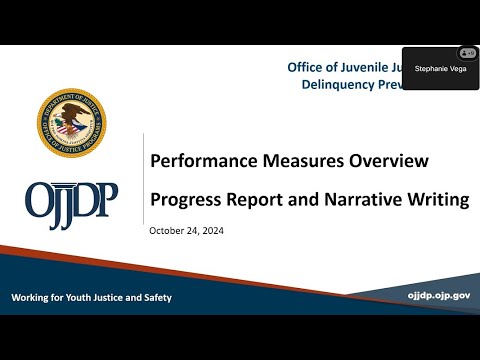
A webinar hosted by the Office of Juvenile Justice and Delinquency Prevention (OJJDP) provided step‑by‑step guidance for grantees on writing progress‑report narratives and using the JustGrants reporting system.
"As an OJJDP grantee, you are required to provide regular updates on award activities," said Stephanie Vega, a training and technical assistance specialist with the OJJDP Performance Management Team, who led the session with co‑presenter Angela Beebe. The presenters said the performance report comprises two parts: performance measures (numeric data) and progress narrative questions (PNQs), which are intended to "tell the story behind the data."
The trainers focused on practical writing guidance. They urged grantees to gather input from team members before drafting, to choose a clear audience (for example, a new staff member or a community reviewer), and to avoid unexplained acronyms by spelling them out on first reference. "When you're introducing an acronym for the first time, you'll want to write out the full name of the term...and immediately follow it with the acronym in parentheses," Vega said.
A central recommendation was to use SMART goals (specific, measurable, achievable, relevant and time‑bound) in narrative answers. Presenters offered concrete examples — converting "train more staff" into measurable targets such as "train 10 staff members and five partners" or "train 15 staff in effective practices by Nov. 15" — so managers can see clear benchmarks and time frames.
The webinar reviewed several frequently asked PNQs and how to answer them: Q6 (an impact story from the reporting period), Q7 (progress on application goals and objectives over the previous and next six months), and Q8 (deliverables completed or in progress, such as SOPs or curricula). Vega emphasized that Q6 should reference the previous six‑month reporting period and that answers should include enough context so a grant manager unfamiliar with a program can understand the response.
Presenters also clarified the difference between Q9 and Q15. "Question 9 is all about the training and technical assistance you delivered," Beebe said; Q15 asks what training or assistance the grantee received or still needs. For Q9, the trainers recommended listing dates, locations, the subject matter, and whether delivery was virtual or in person.
On challenges, Q14 asks grantees to report obstacles during the activity period and how they were addressed. Vega asked grantees to be specific — for example, describing particular JustGrants errors, delays in accessing funds, staff turnover, or missing job descriptions — and to supply ticket numbers or documentary details when available.
Logistics covered default platform behavior: the session will be recorded and posted to the OJJDP Performance Measure Training Resource webpage, but presenters said the Q&A portion would not be recorded. They also said the slide deck and a link to the progress‑report questions PDF will be shared after the webinar and that the PMT Helpdesk and JustGrants Service Desk are available for follow‑up support.
The presenters closed by listing resources and next steps: review the definitions and questions document for assigned measures, draft SMART goals for the next six months, and contact the PMT Helpdesk for personalized assistance. The webinar remained open for 5–10 minutes of live Q&A at the end.
The training did not include formal votes or policy decisions; its purpose was instructional and aimed at improving grantee reporting quality and clarity. The slide deck and recording will be posted to OJJDP resources for participants to reference.