Get Full Government Meeting Transcripts, Videos, & Alerts Forever!
Get email alerts on the Antitrust topic
No spam. Unsubscribe anytime.
Justice Department sues Visa, alleging monopolization of U.S. debit network
Summary
The Justice Department filed a monopolization lawsuit accusing Visa of using contractual restraints and other practices to block competition in the U.S. debit-transaction market, extracting more than $7 billion annually in network fees that the complaint says are passed on to merchants and consumers.
The Justice Department announced it has filed a lawsuit accusing Visa of illegally monopolizing the U.S. debit-transaction market by using contracts and fee structures that deter banks, merchants and potential entrants from using competing payment networks.
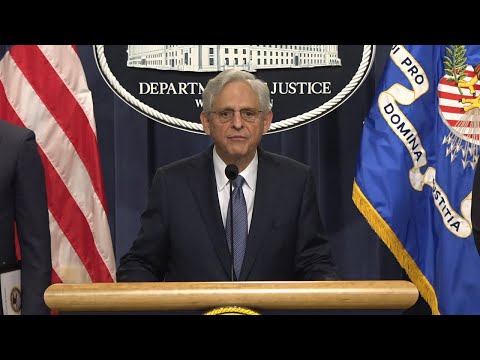
Attorney General Garland said the complaint alleges Visa violated Sections 1 and 2 of the Sherman Antitrust Act by deploying "a web of unlawful anti-competitive agreements" that penalize merchants and banks for routing transactions away from Visa and by coercing would‑be entrants into agreements not to compete. "We allege Visa is a monopolist in the debit transaction markets that is violating federal antitrust law and inflicting often hidden, but significant harm on American consumers and businesses," Garland said.
The complaint, summarized by Principal Deputy Assistant Attorney General Doha Mekki, frames Visa’s dominance as both vast and longstanding: the briefing described roughly 157 billion U.S. debit transactions processed annually and said more than 60% of those transactions — and over 70% of online debit transactions — are routed through Visa's network. The department said Visa collects "more than $7 billion each year in network fees on U.S. debit transactions," a sum it alleges is substantially inflated by the company’s exclusionary practices.
DOJ’s complaint details a variety of contractual mechanisms it says foreclose rivals: so‑called "volume requirements" that pressure banks and merchants to route large shares of transactions through Visa or face higher fees; agreements that the department says co‑opt or neutralize potential fintech entrants; and arrangements the department characterizes as payoffs or penalties that deter competitive innovation. As one DOJ official quoted a Visa executive, the company "got Square on a short leash," language the department says illustrates how Visa enlisted partners to limit competitive entry.
Officials emphasized the alleged consumer impact. "Millions of Americans prefer to use debit transactions, which are often the primary option for lower income consumers," Garland said, and DOJ argued that higher network fees raise prices or reduce quality for goods and services because merchants and banks pass on costs to consumers.
When asked how large a portion of the $7 billion the department attributes to unlawful conduct, Garland deferred to litigators; Mekki said the complaint alleges those fees represent a substantial portion of Visa's U.S. debit revenues and that the scope of any remedy will follow from a court’s liability finding. "The scope of any relief is based on a liability finding," Mekki said, adding that remedies in antitrust cases can range from behavioral restrictions to orders designed to "unfetter the markets," and that it is too early to predict specific structural remedies.
In a brief question‑and‑answer session, reporters also raised unrelated and sensitive topics: Garland declined to comment beyond court filings on an ongoing criminal investigation into an alleged assassination attempt but said the department will cooperate with state authorities "to the extent consistent with the law." On whether the Antitrust Division is overextended amid other high‑profile cases, DOJ replied it is not.
The case has been filed in federal court; DOJ attorneys said they will present evidence to prove liability and then pursue appropriate relief. The department credited attorneys and economists in its Antitrust Division for preparing the complaint and said it intends to litigate the matter in court.
The department did not state a timetable for litigation, and specific remedies and damages will be determined through the judicial process.