Get Full Government Meeting Transcripts, Videos, & Alerts Forever!
Get email alerts on the Budget topic
No spam. Unsubscribe anytime.
Woodland Hills officials warn of multimillion-dollar revenue shortfall, propose retirement incentives and options
Summary
District finance staff reported a sharp drop in assessed value and projected multimillion-dollar shortfalls; options discussed included early-retirement incentives, targeted refunds of debt, and potential tax increases to preserve fund balance.
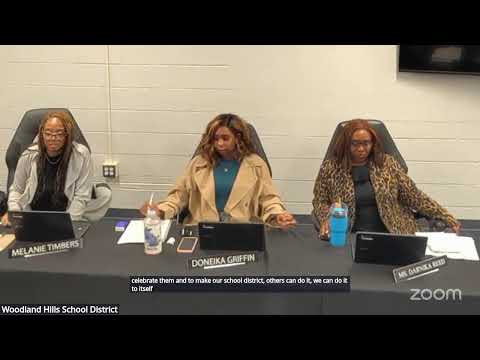
Woodland Hills School District finance officials told the board March 4 the district faces substantial near-term revenue pressure driven by declining assessed values and a falling common level ratio. Staff reported the common level ratio had declined to about 50.14 percent, saying the district lost roughly $42.7 million in assessed value across two comparative reporting years, which translates to an estimated tax revenue loss in the low millions.
Officials outlined mitigation options. Raising taxes by 1.25 mills would generate an estimated $1.9 million; a half-mill increase would bring roughly $785,000–$870,000. The governor’s proposed adequacy/equity allocation could deliver an estimated $2.0–$2.1 million, which staff called essential to close part of the gap. District staff also proposed refunding 2018 debt to reduce interest costs, estimating up to $1.0–$1.6 million in budget relief that could be applied to next year’s budget.
Staff and board members discussed internal options to limit spending, including approaching administration salary freezes or organizational re-structuring, and the possible creation of a development officer to pursue non-tax revenue. The district’s current fund balance was stated at roughly $10.65 million; scenarios provided projected the fund balance could decline to about $5.5 million with a tax increase or to $3.2 million with no tax increase. Staff warned that mandates—particularly special-education costs and charter-school tuition and transportation—are key drivers of the structural gap and are only partially controllable at the local level.
Administrators said they will present a more detailed budget presentation to the board with department-level breakdowns and that the early-retirement incentive will be placed on the next month's agenda to allow employees adequate time to decide. Board members asked staff to model internal cuts before presenting a tax proposal to taxpayers and requested additional details about the financial impacts of previous tax-rate decisions and the operating cost of recently opened facilities.
Next steps: a fuller departmental budget presentation in April and a vote on the early-retirement incentive in a forthcoming meeting; staff to return with billing and debt-refunding details requested by the board.