Get Full Government Meeting Transcripts, Videos, & Alerts Forever!
Get email alerts on the Interceptor Restoration topic
No spam. Unsubscribe anytime.
Federal, local officials say PTOIC interceptor flow restored a week early; remediation continues
Summary
EPA and local partners announced that wastewater flow through the PTOIC interceptor was restored a week ahead of schedule and the emergency repair phase has ended; agencies said remediation and daily water testing will continue while funding and reimbursements are sorted.
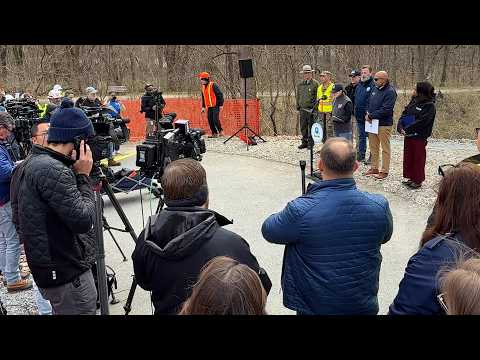
Jessica Kramer, assistant administrator for the Environmental Protection Agency's Office of Water and the senior federal response official, said Saturday that "On Saturday, wastewater flow through the PTOAC interceptor was restored a week ahead of schedule," marking the end of the emergency repair phase and allowing environmental remediation to accelerate.
DC Water CEO David Gatis said crews working around the clock achieved the milestone after a 57-day emergency response, and he credited federal, state and local partners. "By restoring the flow this weekend, we no longer need the canal bypass that was created on January 24th. That bypass kept us close to two billion gallons of wastewater from reaching the Ptoac River," Gatis said.
Officials described a coordinated effort: President Trump's Feb. 20 emergency declaration enabled FEMA to provide funding and resource coordination; the National Park Service helped build a freshwater dam to flush the CNO canal; and the U.S. Army Corps of Engineers managed storm-water diversion and site protections. FEMA Associate Administrator Greg Phillips said federal agencies issued mission assignments and "obligated over $2.5 million to support this effort." EPA staff said they have taken over water-quality sampling from DOE and that EPA's Fort Me laboratory will continue analysis.
Colonel Francis Pah of the U.S. Army Corps of Engineers said emergency remediation activities are complete in two shoreline areas, citing work at the Rock Wall Culvert and the downstream shoreline near Swainson Island. Pah described an "almost surgical" cleanup in sensitive shoreline sections using National Park Service–approved preservation methods and erosion-control measures.
Ed Wenoff, superintendent of Chesapeake and Ohio Canal National Historical Park, said park staff have worked with agencies to protect natural and cultural resources and that the next phase is cleaning the canal prism used as the bypass.
In question-and-answer exchanges, EPA and DC Water officials said remediation will proceed in phases. EPA will lead cleanup near the Clara Barton Parkway and continue soil and water sampling; DC Water said the current remediation phase could take "a couple of months" and that other capital improvement projects could extend for about nine months. Officials emphasized continued daily testing and public updates until the site is fully remediated.
The agencies said the restoration milestone allows them to stop using the temporary bypass and to accelerate environmental work, but that monitoring and rehabilitation will continue until the river and impacted shorelines meet agreed cleanup standards.