Get Full Government Meeting Transcripts, Videos, & Alerts Forever!
Get email alerts on the Special Education Programs topic
No spam. Unsubscribe anytime.
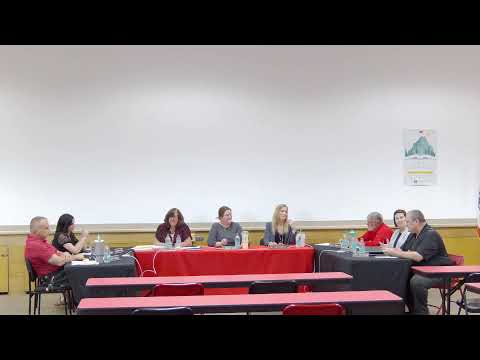
Parent raises special-education concerns as board hears new 'Quaker Corner' job-training plan
Summary
At the New Philadelphia City Board of Education meeting, staff described 'Quaker Corner,' a student-run retail and digital-media training program aimed at pre‑apprenticeship credit; a parent later urged the board to fix inconsistent IEP implementation and staff training. The board pledged a follow-up meeting to answer specific questions.
Mrs. Okconor, the evening’s special-education presenter, described “Quaker Corner” as a student-run store and training pathway intended to teach retail and digital-media job skills and to provide an alternative pre‑apprenticeship route that will count for fine‑arts credit and graduation pathways.
"Quaker Corner will be... a store, a storefront with a storefront sometimes, but more job skill focused to start," Mrs. Okconor said, describing plans for a digital media course and retail experience tied to an AP business and personal finance course and bookkeeping support from the school’s accounting class.
The presenters told the board they had purchased printers, embroidery and heat‑press equipment and other supplies funded in part by federal dollars to let students make T‑shirts, mugs and other products. They said the program aims to expand students’ employment options beyond hospitality and fast‑food roles and to provide hands‑on pre‑apprenticeship hours for students who pursue alternative graduation pathways.
During public comment later in the meeting, Connie Ripian, who identified herself as a parent of a child on the autism spectrum and a substitute teacher in district schools, told the board that many families experience inconsistent communication about Individualized Education Program (IEP) meetings and services. She said she and other parents reported delays in evaluations, inconsistent implementation of IEPs, and cases where assistive tools were removed by classroom staff without apparent oversight.
"When services outlined in a student's plans are not fully delivered, that student is effectively being left behind," Ripian said, and added she has spoken with more than 30 parents who reported similar frustrations and said some are considering private schooling or homeschooling.
A board member thanked Ripian and said the district would follow up. The board indicated it would convene a meeting with district leadership — including the superintendent and relevant staff members mentioned during comments — to answer a list of specific questions about staffing, monitoring of IEPs, funding for special‑education services, and professional development. The board’s representative said they would send an email within 24 hours to schedule that follow-up.
Why it matters: The program presentation and the parent’s public comment together spotlight two sides of the district’s special-education work: staff are developing new career-focused pathways that may help students transition to employment, while some families report systemic gaps in IEP communication and service delivery that the board says it will investigate.
What’s next: District officials told the board they will schedule a follow-up meeting to answer the parent’s questions and provide requested clarifications on staffing, monitoring of IEPs, and funding; no formal remedial action or timeline was announced during the meeting.