Get Full Government Meeting Transcripts, Videos, & Alerts Forever!
Get email alerts on the Ethics Conflict Of Interest topic
No spam. Unsubscribe anytime.
City attorney reviews conflict-of-interest rules, urges disclosure and recusal
Summary
City Attorney Vince Jones briefed the Brookings City Council on state and local conflict-of-interest rules, emphasized disclosure and recusal, reviewed a decision flowchart, and answered council and public questions about practical scenarios including employment by entities seeking city action.
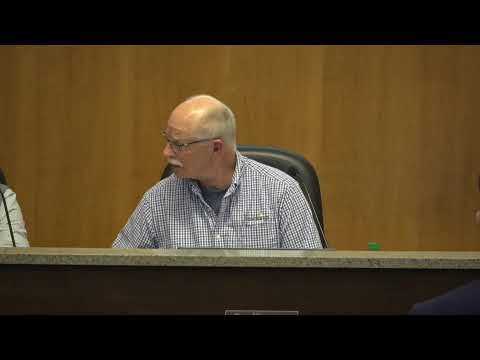
Vince Jones, the city attorney for Brookings, told the City Council that city officials should disclose potential conflicts of interest, explain whether they can be impartial and — if necessary — recuse themselves from discussion and voting.
Jones delivered the conflicts-of-interest training after the mayor opened the regular council meeting. He reviewed three legal layers that affect officials: constitutional due process concerns, state statutes focused on direct pecuniary interests, and municipal ordinances, which in Brookings’ case are broader and can impose stricter rules.
The training emphasized three practical steps Jones recommended officials follow: disclose the nature of any potential conflict at a public meeting, state whether you believe you can consider the matter impartially, and repeat the disclosure at the conclusion so the council may ask questions or vote to disqualify the member. "If you disclose a potential conflict of interest, the rest of the body can...vote to remove you," Jones said.
Jones explained the difference between legislative matters (those of general applicability such as budgets or zoning ordinances) and quasi‑judicial matters (individual permits or appeals). He cited a court example, the Hullborn case, to show that apparent ties to outside interests do not automatically require disqualification under state law. "State law gives you quite a bit of discretion," he said, adding that a court challenge requires clear and convincing evidence of bias.
Citing Brookings’ local rules, Jones pointed the council to the city charter (section 8.01) and city code section 263. He said the municipal code defines conflict to include a direct personal or financial interest of the official, a spouse, household member, business associate, employer or employee in the outcome of a matter before the body. "The city's conflict-of-interest policy is intended to avoid the appearance of impropriety whether or not there is an actual conflict of interest," Jones said.
Jones walked the council through a flowchart his office developed, which combines state and local tests and asks whether an interest is pecuniary, whether the interest is minor or widely shared, and whether a reasonable person would conclude the official could be influenced. He also advised that recusal and, in his view as a best practice, leaving the room during discussion are prudent options. "If you cannot be objective...you probably should recuse yourself," he said.
Council members and the public raised practical questions. A resident asked whether a councilor who works for a private company that could benefit from a tax-increment financing (TIF) project should recuse; Jones said employment by a company that would receive direct dollars could create a conflict and that recusal would be appropriate in close cases. Council member Specker asked about the phrase "direct criminal conflict of interest" in statute; Jones said it refers to knowingly using public funds for personal benefit and would be treated under theft statutes.
Councilman Muran asked how officials should handle the perception of a conflict. Jones reiterated that the process begins with the official's own assessment and public disclosure, and that the council has the option to disqualify the member by vote. He added that detailed local definitions in Brookings’ ordinance provide more guidance than state law alone.
The presentation concluded with the council confirming next meeting business, including a construction-manager-at-risk bid for the police department, ordinance readings on animals and trees, and an election agreement with the county. The council then voted to enter executive session under SDCL 1-25-2.1 to discuss the qualifications, competence, performance, character or fitness of a public officer or employee; the mayor announced there would be no business after the executive session.
The training did not propose ordinance changes; Jones said he believed the current Brookings ordinance was adequate but that staff are available to analyze particular questions as they arise.