Get Full Government Meeting Transcripts, Videos, & Alerts Forever!
Get email alerts on the Program Continuation topic
No spam. Unsubscribe anytime.
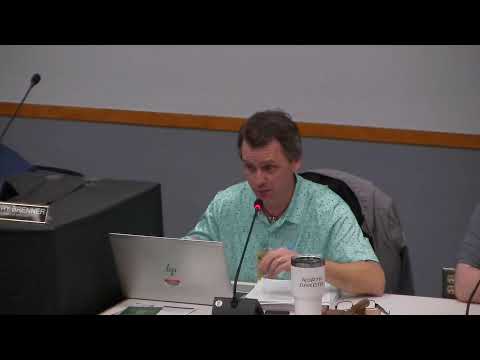
Board votes 8–1 to continue Grand Forks Virtual High School despite budget tradeoff
Summary
After debate about enrollment, costs and staffing, the board voted 8–1 to continue the district’s Virtual High School. Trustees acknowledged continuation removes a 0.5 FTE staffing savings from the district’s reduction plan and directed staff to seek enrollment and funding offsets.
The board debated whether to continue or discontinue the Grand Forks Public Schools Virtual High School and ultimately voted to continue the program.
Dr. Brenner said the program had operated for a year with roughly 25–27 students and that four out‑of‑district students had requested open enrollment, which would bring additional per‑pupil revenue (presented as $11,349 per pupil). He and Dr. Galatzer described the district’s hybrid mentoring model — required weekly touchpoints with a mentor teacher and in‑district assessment proctoring — and argued the model yields better student outcomes than fully asynchronous statewide distance alternatives.
Opponents raised budget concerns. Dr. Lund called for discontinuation during a budget crisis, and one board member proposed (and the board rejected) an amendment to reduce board compensation as a budget offset. Supporters, including Ms. Flynn and other trustees, argued that the virtual program is cost‑efficient relative to comparable cuts and serves students who need an alternative pathway.
The board motion to continue the Grand Forks Public Schools Virtual High School, recognizing that continuation removes the identified 0.5 FTE staffing savings from the overall reduction plan, passed by roll call, eight yes, one no.
Next steps: staff will continue to monitor enrollment and costs, pursue out‑of‑district enrollments to offset costs and report on capacity and funding implications in follow‑up budget work.