Get Full Government Meeting Transcripts, Videos, & Alerts Forever!
Get email alerts on the Student Anxiety topic
No spam. Unsubscribe anytime.
Powhatan County clinicians outline how anxiety shows up in students and offer classroom and home strategies
Summary
School‑based clinicians in Powhatan County described how anxiety manifests across ages, explained brain‑based metaphors for regulation, and offered practical techniques for caregivers and teachers to support students, plus local resource links and upcoming trainings.
Katie Matheni, director of student services and interventions for Powhatan County Public Schools, opened a Powhatan Strong virtual community chat on student anxiety and introduced school‑based clinicians who presented practical, age‑tailored strategies for parents and educators.
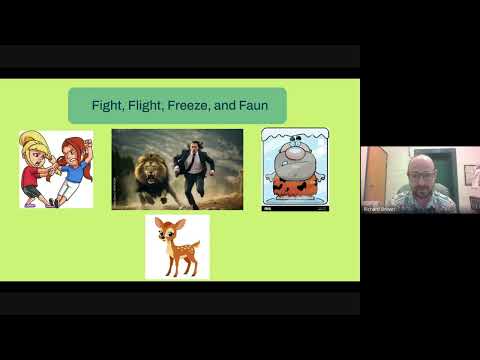
The presenters — licensed clinical social workers Caitlyn Wallace and Richard Brown and licensed supervisor Rachel Wells — framed anxiety as a normal brain response that can hijack thinking and behavior. Richard Brown described the amygdala and hippocampus’ roles and summarized anxiety reactions as “fight, flight, freeze and fawn,” saying the response is evolutionarily programmed to protect people but can become maladaptive in school settings.
Caitlyn Wallace emphasized developmental differences, explaining that children ages roughly 2–12 more often show anxiety through tantrums, separation anxiety and somatic complaints such as headaches or stomachaches, while adolescents are more likely to withdraw, avoid social activities or display sudden anger. Wallace noted that the brain’s executive functions mature over time, and that many students “don’t always have the ability to hang on to that rational part” when stressed.
Presenters recommended classroom and home tactics that prioritize relationship and co‑regulation before correction. Rachel Wells urged caregivers and teachers to “come in with a curious mindset,” focus first on connection and model calm behavior so students can mirror regulation. Practical techniques offered included brief, playful regulation exercises (a “rainbow hunt,” “hot cocoa” breathing, hand‑tracing breaths), movement breaks, and simple signals students can use when they need help.
Speakers also urged adults to reinforce effort over perfection, break large tasks into manageable steps, and limit the reinforcement of avoidance (for example, not routinely allowing students to miss school when anxiety arises). They recommended collaborating with school counselors and trusted staff to create supports for students who struggle with anxiety.
A short video excerpt featuring “Dr. Becky” reinforced those messages, modeling parental language that validates children’s feelings while encouraging participation (for example, “I believe you... I believe in you”). Presenters said slide links, video resources and local contact information would be shared after the session.
Matheni closed by thanking the presenters and announcing two upcoming offerings: a Powhatan Strong virtual chat on student nutrition scheduled for April 16 at 5:00 p.m. and an in‑person parent training on suicide prevention (QPR and safe‑talk) at Powhatan High School on April 9 at 6:00 p.m.; registration was required.
The presenters provided recommended reading (The Good Inside; The Whole‑Brain Child), described the availability of the county community services board and school‑based clinicians for follow up, and invited attendees to submit additional questions via the event Q&A or by contacting district staff.