Get Full Government Meeting Transcripts, Videos, & Alerts Forever!
Get email alerts on the Paid Time Off topic
No spam. Unsubscribe anytime.
Sun Prairie HR director outlines flexible PTO and handbook changes ahead of May 26 board vote
Summary
Chris Sadler, director of human resources for the Sun Prairie Area School District, presented handbook revisions that would replace PTO categories with a single planned/unplanned PTO bank, remove caps on banked PTO, clarify retirement payouts, add an employee wellness clinic section, and adjust stipends. The proposals were presented for board approval on May 26, 2026.
Chris Sadler, director of human resources for the Sun Prairie Area School District, told the school board the packet of handbook revisions includes a major change to paid time off that he said will give employees more flexibility while aligning language across employee groups.
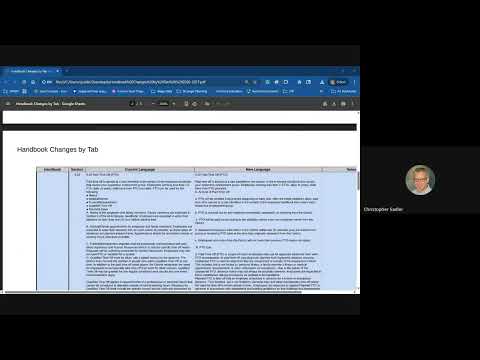
Sadler said the proposed edits replace separate PTO buckets (illness, medical, dental, funeral, qualifying time and personal days) with a single PTO bank divided into planned and unplanned use. “The only 2 choices really are planned and unplanned, PTO,” Sadler said, explaining the district modeled the new language on practices used by Middleton Cross Plains and adjusted that wording for local expectations.
Proponents, Sadler said, expect planned PTO to be used in defined increments and to require advance notice for longer absences. Under the draft language, planned absences of three to five consecutive days are generally requested at least three months in advance and are expected to be limited to about one such request per year unless approved after discussion with a supervisor; one- or two-day planned absences would be requested about two weeks ahead to allow for substitute arrangements.
The proposal also removes caps on how many PTO days employees can bank. For professional educators, the packet would eliminate a 215-day cap that previously triggered a $50 per-day payout for days above that threshold at year’s end; Sadler said removing the cap and ending the annual payout for days above 215 aims to produce a roughly net-zero effect while letting employees retain unused PTO.
Sadler described related handbook edits: adding section 6.06 to the all-employee handbook to memorialize who is eligible for the employee wellness clinic; clarifying section 6.16 so that employees who retire in a milestone year still receive milestone stipends rather than forfeiting them; and clarifying temporary medical disability language so supervisors may request medical certification and coordinate return-to-work decisions with HR.
He also addressed interactions with Family and Medical Leave Act (FMLA) entitlements when spouses both work for the district, saying combined FMLA remains 12 workweeks and that leave beyond that would be designated district-provided temporary medical disability as outlined in the proposed language.
Other group-specific changes include redefining on-site workdays for professional educators as contracted, self-directed work time and increasing the Building Leadership Council (BLC) stipend from $800 to $1,200 to reflect time given up on those workdays. Support-staff language that restricted taking PTO immediately before or after holidays would be removed, and administrators’ handbook language would set a minimum retirement age of 55 and align stipend and retirement provisions with the new PTO approach.
Sadler said the revisions grew out of employee engagement work groups that included support staff, administrative staff and professional educators. He noted that Middleton Cross Plains reported only a small initial uptick in PTO use after a similar change and that use then returned to prior levels, a point he cited in support of moving to a more flexible system.
The handbook proposals were presented to the board for consideration and are listed on the agenda for approval at the May 26, 2026, school board meeting. The presentation did not record a vote or motion in this transcript.