Get Full Government Meeting Transcripts, Videos, & Alerts Forever!
Get email alerts on the Caregiving Policy Acl topic
No spam. Unsubscribe anytime.
Administration for Community Living names caregiving its top priority, highlights AI initiative and National Strategy update
Summary
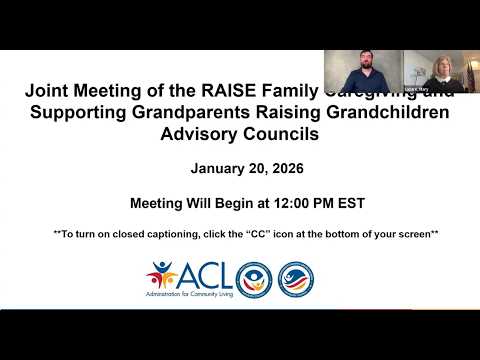
ACL Principal Deputy Administrator Mary Lazare told RAISE and SGRG Council members that caregiving is the agency's top priority, cited the scale of unpaid family caregiving and the need for better outreach and respite, and referenced an AI caregiver initiative the department announced in November.
Mary Lazare, the principal deputy administrator serving as the senior official performing the duties of the Administration for Community Living, told members of the joint RAISE and SGRG Advisory Councils that supporting family caregivers is ACL’s top priority and will guide the agency’s work this year. “You make a difference! You make a huge difference,” Lazare said, thanking Council members for their work and urging renewed attention to caregivers’ needs.
Lazare placed the work in stark terms: she said roughly 63 million Americans now identify as family caregivers and that many of those caregivers provide intensive support — citing an average of about 27 hours per week and noting that for many people caregiving exceeds 40 hours weekly. She told the Councils the department seeks to improve access to respite, training and supports that help people remain at home, and that outreach remains a major gap: caregivers must know where to find services when they need them.
The administrator also referenced a November announcement by HHS leadership of an "AI Caregiver Initiative," which she said aims to explore how artificial intelligence can support unpaid family caregivers and paid direct care workers. Lazare described the initiative as intended to identify “innovative, affordable, AI-enabled tools” that can expand reach without sacrificing safety or quality.
Why this matters: Lazare argued that family caregivers are the “bedrock” of the long-term care system and said ACL will emphasize implementation of the National Strategy to Support Family Caregivers rather than letting the strategy remain only a report. She framed the work in economic terms — noting the individual and societal cost of caregiving — and called on Councils and partners to scale outreach so caregivers know what supports exist.
ACL staff and partners outlined next steps at the meeting. Council staff said they expect a public National Strategy update later in the year and will hold additional public meetings and a 60-day comment period as part of the update process. Grantees and federal partners present said they would publish materials, pilot results and tools on ACL and partner microsites to help states and local agencies replicate effective outreach and support approaches.
"We want people to know readily what resources are available, to readily know where to go," Lazare said. "We stand ready to do that."