Get Full Government Meeting Transcripts, Videos, & Alerts Forever!
Get email alerts on the Classroom Management topic
No spam. Unsubscribe anytime.
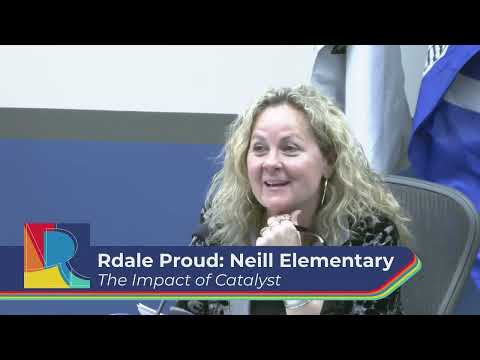
Neal Elementary credits 'Catalyst' classroom model with sharp drop in support calls and calmer classrooms
Summary
Neal Elementary told the Robbinsdale school board that its multi‑year rollout of the Catalyst classroom‑management framework cut classroom support calls from 1,860 to 848 and raised the share of students with four or fewer calls from 75% to 91%, while teachers reported improved regulation and instructional time.
Neal Elementary Principal Lana Lindeman told the Robbinsdale Area School Board on March 2 that a sustained, three‑year adoption of the Catalyst classroom‑management framework has led to measurable improvements in classroom regulation and instructional time. Lindeman said Neal began collaborating with Catalyst in 2023 with whole‑staff training and has since expanded coaching, specialty skills and certification for educational assistants.
The district presentation showed concrete changes in behavior‑support metrics. Lindeman reported that Neal recorded 1,860 support calls from classroom spaces in its first year and 848 calls in year two, a 46% reduction. “During year two, we were able to decrease that number to 848. This was a 46% decrease in calls,” the presentation noted. Presenters also said the share of students with four or fewer support calls rose from 75% to 91% year over year.
Teachers who have used Catalyst described classroom shifts that staff and students can see. Sarah Geremco, a first‑grade Catalyst‑certified teacher and internal coach, said, “The Catalyst foundational skills help me get students' attention, keep them engaged, set students up for success, and then support and maintain that success. When I started implementing these skills with fidelity, I noticed that I was more regulated and my students were more regulated.” Third‑grade teacher Becky Berg added, “After 23 years in the classroom, I finally feel confident in my classroom management. The training I've received over the past few years has transformed my practice.”
Presenters described how implementation supports — classroom observations, weekly internal coaching, live visits to fully implementing schools and direct access to the Catalyst team — have contributed to consistent practice. The school also said it expanded Catalyst beyond classrooms into hallways, the cafeteria and the playground so students see the same behavioral cues across the day; an educational assistant who initially doubted the approach said consistent use of visuals and a stable ‘home base’ in the cafeteria reduced repeating directions and helped students comply.
Board members asked about substitute teachers and fidelity. Lindeman and her team acknowledged that many substitutes do not arrive trained in Catalyst and that support calls can be higher when substitutes are present; the school said it focuses coaching on frequent substitutes and aims to certify more educational assistants to maintain consistency. The presentation also tied Catalyst goals directly to the site improvement plan (SIP), saying the program’s focus on student regulation supports goals to reduce out‑of‑class regulation time and increase instructional minutes.
The board thanked Neal staff and students for the presentation and discussed next steps for expanding staff training districtwide. The school asked for continued board support to expand Catalyst training across K–8 sites and build on the reported reductions in classroom support calls.