Get Full Government Meeting Transcripts, Videos, & Alerts Forever!
Get email alerts on the Legislative Agenda topic
No spam. Unsubscribe anytime.
Lawmaker outlines housing, energy and AI priorities and ties SAVE Act vote to reopening government
Summary
A lawmaker said a housing bill from the Senate Banking Committee and proposals on energy and AI are top priorities and said consideration of the SAVE Act depends on restoring DHS funding and reopening the government; he also addressed Iran, tariffs and worker pay during a shutdown.
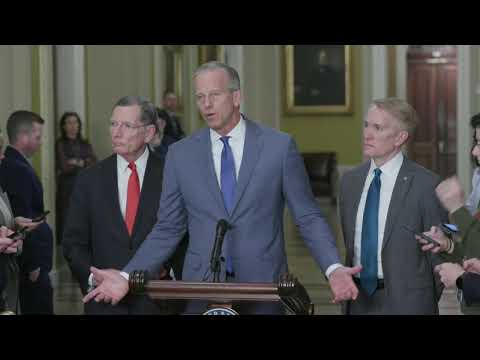
The lawmaker opened a briefing by citing recent bipartisan accomplishments and said the immediate agenda will focus on housing, energy prices and technology innovation. "Safer streets, more money in your pocket, and new opportunities for working families to get ahead" are the items he said the chamber will pursue, adding that a housing bill from the Senate Banking Committee could be set up for a vote as soon as next week.
The priorities were framed as broadly nonpartisan. "These are not, you know, partisan issues," the lawmaker said, urging Democrats to work across the aisle on waste, fraud and abuse and other measures. He also warned the public about partisan division, saying observers had seen "two Americas" in recent chamber behavior.
In a reporter-led question-and-answer session, reporters asked about Iran, military options and whether the country represents an imminent threat. The lawmaker said he was "listening" to briefings and noted "significant accumulation of assets in that region," saying the administration is preparing contingencies and "working with allies" though he offered no new policy decision.
On the SAVE Act and related floor strategy, the lawmaker linked timing to government funding: he said he would wait to move on the bill until DHS funding was restored and the government reopened, arguing that once the Senate was engaged in a "talking filibuster" it would be difficult to pivot back to reopen the government. "Once we get on, if we were to go down that path, it is very hard to pivot and get back to open up the government," he said, and described the Republican conference as not unified on pursuing a talking-filibuster strategy.
Reporters also asked about tariffs after the president—haracterized continuing a 15% tariff as within his authority. The lawmaker noted there are statutory trade authorities that have been used in the past (including sections 232 and 301) and that prior court rulings have complicated some approaches. He said the administration is "exploring" authorities but acknowledged "open questions" about the tariff strategy and whether Congress should reassert its Article I role on trade.
When asked whether TSA and other DHS workers should be paid during a shutdown, the lawmaker said yes, calling shutdowns a situation "nobody wins" and urging solutions to keep employees paid. He named agencies he said needed to be funded: DHS, TSA, the Coast Guard and FEMA, and said prior negotiated deals had been voted down on the Senate floor.
The session ended with a follow-up question about the Secret Service; the recorded transcript ends before an answer was given.
The lawmaker said the Senate could seek to set up a vote on the housing bill soon if procedural timing allows; further action on the SAVE Act and any tariff changes will depend on funding resolutions, internal conference agreement and legal review of executive authorities.