Get Full Government Meeting Transcripts, Videos, & Alerts Forever!
Get email alerts on the Special Education topic
No spam. Unsubscribe anytime.
Wake County board hears urgent appeals over special‑education workloads as district retools CCK program
Summary
Board members, parents and staff pressed district leaders about plans to discontinue some CCK classrooms, the workload and paperwork burden on special‑education teachers, and proposals for case‑management pilots and additional staff; staff said no layoffs were planned for 2026–27 because grant recoding temporarily preserves positions.
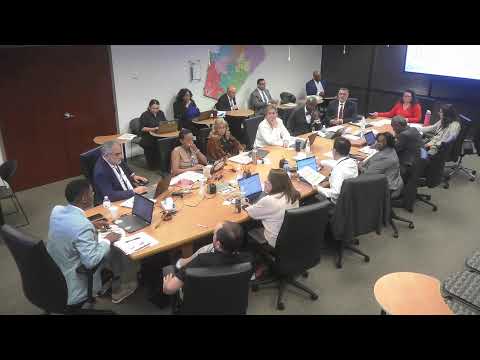
A lengthy, often emotional portion of the May 5 work session centered on proposed changes to regional special‑education programming and the district’s capacity to support teachers and families.
Board members asked for detail about a proposal to discontinue 16 small CCK classrooms that currently serve fewer than 150 students in total. District staff explained that the change would reassign some students to base schools where services would be determined by the IEP team and that the district intends to preserve the teachers by redeploying them into vacancies or other regional roles rather than eliminating positions outright.
Several board members and parents pushed back, citing rising case management workloads, delay in responses to parent inquiries, and the mental and physical toll on teachers. "Will their workload increase? Will there be supports in place?" several board members asked. Staff said the district is providing targeted training for kindergarten teachers on behavior management, deploying behavior analysts and registered behavior technicians funded through federal sources where available, and creating rapid‑response support teams to deploy to schools with acute behavioral needs.
Teachers’ representatives and board members urged more structural solutions rather than short‑term Band‑Aids: repeated requests included dedicated case‑management positions, pilots for IEP paperwork support, and clearer data showing which students are categorized for behavior versus other disabilities. Staff said they will present more detailed data to the board and suggested piloting targeted supports before making wide personnel changes.
Costs and scale were discussed bluntly. Board members repeated a teacher association ask for additional dedicated case managers and observed that placing one extra case manager in every school would cost tens of millions (staff estimated roughly $16M in an illustrative calculation); board members asked staff to model phased or regional designs that could be piloted at lower cost.
On the program timeline, staff said the district will not eliminate special‑education teachers for 2026–27 because of the one‑time funding maneuver described elsewhere in the meeting; further changes will depend on state funding, enrollment shifts, and pilot outcomes.
Speakers quoted: "We haven't cut any of those teachers," staff said, describing the one‑year preservation step. "If there's anything that we want to add, we have to determine how we would pay for it," staff added when board members asked about adding positions.
What’s next: staff committed to provide more disaggregated data about special‑education categories (behavior vs. other disabilities), to propose pilot designs (for example, regional case‑manager pilots), and to return with budgetary options and timelines for implementing any structural supports.
Ending: The board asked staff to bring a targeted plan for special‑education supports to future work sessions so the issues raised in public comment and by board members can be assessed alongside budget constraints.
Speakers: Dr. Taylor and other staff explained program mechanics and IEP team decision‑making; Miss Rice and Miss Gordon pressed staff for operational answers on case‑management, paperwork burdens and supports.