Get Full Government Meeting Transcripts, Videos, & Alerts Forever!
Get email alerts on the Public Comment Immigration History topic
No spam. Unsubscribe anytime.
Residents press Clermont County commissioners on immigrant enforcement and local history during public comment
Summary
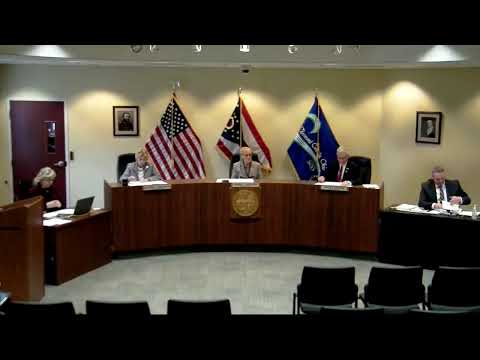
During public comment at the Feb. 25 Clermont County commissioners meeting residents urged protection of local historic sites and debated county responses to ICE activity, with speakers citing local abolitionist history, a Black cemetery cleanup, and concerns about the local effects of immigration enforcement.
A string of public commenters at the Clermont County Board of Commissioners meeting on Feb. 25 used the board’s five‑minute public‑comment period to raise two recurring themes: preservation of local Black history and concern about immigration enforcement and its local impact.
A resident identifying herself as Regina described Cranston Memorial Presbyterian Church as a former center of the county’s abolitionist movement and said volunteers have spent two years cleaning tombstones at a Black cemetery along Route 132 so that family members and researchers can read inscriptions. She cited visits by abolitionist-era speakers and the area’s connections to Ulysses Grant’s birthplace as part of the historical case for preservation.
Several speakers addressed immigrant enforcement and local consequences of federal immigration actions. Dean Browning said protests of Immigration and Customs Enforcement are "short on facts," stated that roughly a million immigrants enter the country legally each year and argued that those present in the country illegally should be removed; he urged the board to support Homeland Security and ICE efforts and local sheriff cooperation. Some other commenters pushed back, describing fear among mixed‑heritage families and saying local contracts with federal agencies can be read as affirmations of enforcement actions.
"We cannot put blinders on," Jane Holster said, describing her daughter’s mixed‑heritage grandchildren who feel threatened in public settings and urging the commission to consider the broader consequences of enforcement policies for families.
Other speakers focused on civic norms and county priorities: Jen Masali urged commissioners to defend the First Amendment and suggested diversifying invocations so the county does not appear to endorse a single faith; Julie Caliver called for media‑literacy leadership from county officials and criticized local communications she said are feeding polarization.
Commissioners responded to some points by emphasizing jurisdictional limits and the distinction they draw between persons legally present and those they described as not lawfully present. Commissioner Painter noted that local elected officials' authority is geographically bounded and said his comments had been offered in that context.
The public‑comment period reflected sharply different views: some residents called for enforcement and law‑and‑order measures, others urged protection of immigrant families and broader civic engagement. The board did not take action on issues raised during public comment.
(Quotes and paraphrases are drawn from the Feb. 25 public‑comment record.)