Get Full Government Meeting Transcripts, Videos, & Alerts Forever!
Get email alerts on the Healthcare Policy topic
No spam. Unsubscribe anytime.
Cheektowaga board endorses New York Health Act in symbolic vote
Summary
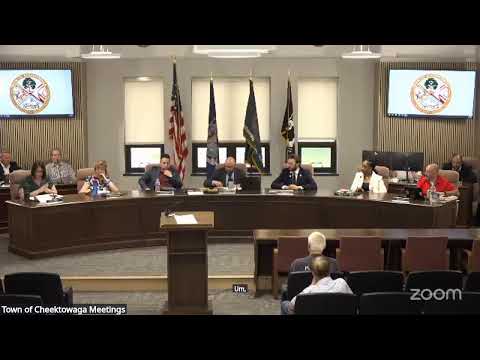
The Town Board of Cheektowaga voted 5–2 on May 26 to support the New York Health Act (Senate Bill 3425/Assembly Bill 1466) via resolution 2026‑311 after members debated potential cost and coverage implications.
The Town Board of Cheektowaga on May 26 adopted resolution 2026‑311 expressing the board’s support for the New York Health Act, legislation that would establish a universal state health‑care program. The board moved the item from the table and held a spirited debate before a roll‑call vote.
Supporters said the measure signals a local commitment to addressing rising health‑insurance costs and to advocating for universal coverage. ‘‘The New York Health Act represents an opportunity for New York to lead with compassion, equity, and long‑term vision,’’ Council member Tiffany Lewis said, urging passage.
Opponents and skeptical members raised questions about feasibility and affordability, citing uncertain savings estimates and international comparisons. Council member Vernon Thompson said longstanding concerns about implementation and potential tax impacts left him unable to support the resolution.
On a roll call, five members voted yes (Elder, Lewis, Noiki, Polarski and Supervisor Brian Noak) and two voted no (Bowski and Thompson). The resolution is a policy statement urging the state Legislature to consider Assembly Bill 1466 and Senate Bill 3425; it does not change local law or local taxes.
The board’s resolution notes concerns about escalating health‑insurance premiums and calls on the state to consider the NYHA as a way to expand access and reduce administrative overhead.