Get Full Government Meeting Transcripts, Videos, & Alerts Forever!
Get email alerts on the Land Use Development topic
No spam. Unsubscribe anytime.
Developer says three on‑site wells meet demand as residents press East Fishkill board on water, traffic and wetlands
Summary
Charbell Duchess presented updates on the 122‑lot Montage subdivision, saying three on‑site wells passed a 72‑hour test and that sewer and roundabout plans are close; residents raised concerns about well impacts, radium detections, traffic and emergency access. Planning board continued the public hearing to Feb. 17, 2026.
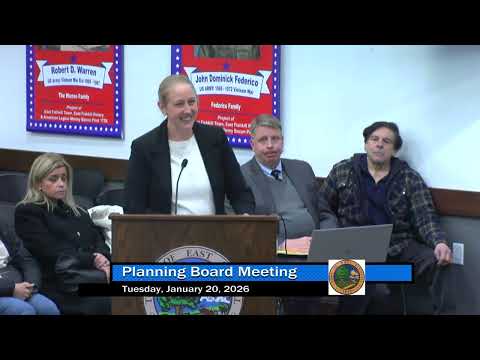
Charbell Duchess representatives told the East Fishkill Planning Board on Jan. 20 that the Montage subdivision proposal — a cluster plan for 122 single‑family lots on a 385.5‑acre assemblage with roughly 70 acres developed and 275 acres preserved — has cleared key technical milestones but still requires outside agency permits and a town memorandum of understanding for off‑site sewer.
Jennifer Gray, attorney for the applicant, said the project has completed SEIS review and that a finding statement was adopted by the board in November 2019. Tom Troy, president of Charbell Duchess, told the board: “We now own it outright,” and said the company had negotiated real estate dedications to allow construction of a roundabout at Route 52 and 216 and is close to an MOU with the town that would set phasing, financing and responsibilities for sewer and water infrastructure.
Why it matters: The project would convert about 70 acres to housing while placing most of the site into permanent conservation easements; it also depends on new water supply and a pump‑station/force‑main alignment to connect to the Hope Hamlet wastewater treatment plant. Those infrastructure choices affect neighboring properties, emergency response and DOT traffic safety at a busy intersection.
Hydrogeologist Stacy Styber of WSP reported the results residents had pressed the board to hear. “All three wells demonstrated adequate yield to meet the maximum day demand of the project,” she said, summarizing 72‑hour pump tests performed in May 2025. The team said the part‑five water quality samples met applicable standards and that radium 226/228 were detected at low levels but did not exceed maximum contaminant levels (MCLs), so the county health department would not require treatment for radium.
On monitoring, the applicant said it mailed 37 notices to property owners within 2,000 feet and ultimately monitored 10 off‑site wells (including three on the adjacent Summit Woods property); where private wells could not be opened, the team installed additional monitoring wells on site. Styber said off‑site monitoring showed no measurable drawdown from the three‑day test but that DEC staff geologists will review the full water‑withdrawal permit application when it is filed.
Residents raised multiple concerns. Several questioned whether a 72‑hour test in May captures seasonal drought risk and whether neighborhood wells with jet pumps or suction‑lift pumps (which cannot always be opened for measurement) were adequately protected. One resident asked about reported radium detections; Styber repeated that radium was detectable but below the MCL and that the Duchess County Department of Health would review water‑quality results.
Traffic and safety at Route 52/216 dominated other public comment. Collier’s traffic engineer, Pete Vasillo, said the roundabout design has been vehicle‑tracked for WB67 tractor‑trailers and that NYSDOT and regional offices have reviewed and commented on the design. The applicant told the board it anticipates constructing the roundabout in the project’s first phase — roughly the first third of homes — but acknowledged final DOT permitting and contractor sequencing will determine the exact timing.
Environmental permits are also pending. The applicant said Army Corps and NYSDEC wetland/stream crossing permits are under review; the Army Corps public comment period ended Jan. 9 with two comment letters received. The project includes three bridge crossings and one culvert crossing; the team said wetland disturbance would be permitted and mitigated and that net wetland loss is expected to be minimized through restoration required by state and federal permits.
Public safety officials and residents asked about fireflow and EMS capacity. Developers and staff said storage and distribution will be designed to meet required fire‑flow criteria and noted town rules require meeting demand with the two best wells out of service. Planning‑level figures and final design remain to be set by engineers and approved through DEC and local review.
The hearing: After several hours of presentations and public comment, applicant counsel and staff asked the board to adjourn the public hearing to the Feb. 17, 2026 meeting with a commitment to supply updated wetland mappings, a draft MOU for sewer/water, and additional traffic input from the town’s traffic engineer. The board voted to adjourn the hearing to Feb. 17, 2026 so the outstanding technical questions can be reviewed further.
What’s next: The applicant said the DEC water‑withdrawal application would be submitted within days and that the team expects to finalize the MOU and respond to agency comments in the coming weeks. The Planning Board requested town traffic staff participation at the next hearing; the hearing remains open and the board will not take final subdivision action until required agency approvals and outstanding technical items are addressed.