Get Full Government Meeting Transcripts, Videos, & Alerts Forever!
Get email alerts on the Education topic
No spam. Unsubscribe anytime.
Lawmaker pushes 'choice, competency and capital' plan to restore education
Summary
A single-speaker policy address argued the U.S. education promise has been broken and outlined three pillars—school choice, personal competency records and birth capital accounts—to reopen opportunity for children, citing the '2024 nation's report card' as evidence of declining outcomes.
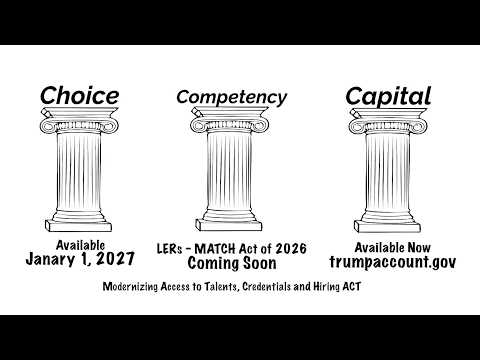
A lawmaker told listeners that the U.S. has drifted away from an ‘‘unwritten promise’’ to teach children skills that would enable them to out‑earn their parents and called for three policy pillars—choice, competency and capital—to restore opportunity.
The speaker said the shift from ‘‘teaching mastery to managing systems’’ has left ‘‘millions of children behind’’ and pointed to the ‘‘2024 nation's report card’’ as showing ‘‘crisis level illiteracy.’’ He summarized the Republican majority’s approach as a three-part legislative agenda to ensure quality schools, measurable skills and starter capital for children.
On school choice, the lawmaker said ‘‘no child should be forced to remain in a subpar, failing, or unsafe school’’ and urged policies that make schools compete ‘‘based on quality, safety, innovation, and most importantly, outcomes.’’ He framed choice as a way to expand access to higher-quality options for students in struggling schools.
On competency, the speaker proposed a ‘‘personal encrypted digital account’’ in which Americans could ‘‘earn, deposit, and store their life experiences of credentials, skills, and education.’’ He said those learning‑employment records would be privately owned and could be shared with employers and educational institutions to demonstrate skills rather than rely solely on credentials.
The speech also invoked artificial intelligence as a connector: ‘‘With the onset of AI, personal [records] will connect real talent with real opportunity,’’ the lawmaker said, presenting AI as a tool to match demonstrated competencies to jobs and further training.
On capital, the speaker proposed that ‘‘at birth, every American child can begin their journey as an owner’’ with a $1,000 Treasury account (referred to in the speech as a ‘‘Trump account’’). He said that $1,000 ‘‘without another dollar added’’ could grow to ‘‘nearly $6,000 by adulthood’’ and that if families or nonprofits invest alongside a child ‘‘up to $5,000 a year, that same account can exceed 300,000 by age 18, and with patience surpass a million dollars a decade later.’’ These figures were presented as illustrative growth scenarios in support of the capital pillar.
The speaker closed by arguing the combination of choice, competency and capital would ‘‘restore hope where it's been lost’’ and give children, including those in foster care and underserved communities, ‘‘a real head start’’ and a ‘‘real path to achieve their dreams.’’