Get Full Government Meeting Transcripts, Videos, & Alerts Forever!
Get email alerts on the Organizational Efficiency topic
No spam. Unsubscribe anytime.
Saint Helena council reviews Blackberg Group efficiency study; residents urge oversight and strategic plan
Summary
The City of Saint Helena heard the Blackberg Group’s final efficiency and business transformation study on May 19. Consultants recommended a multi‑year transformation roadmap, a city strategic plan, talent and IT leadership hires, and targeted fraud‑risk assessments; residents urged independent oversight and more community engagement.
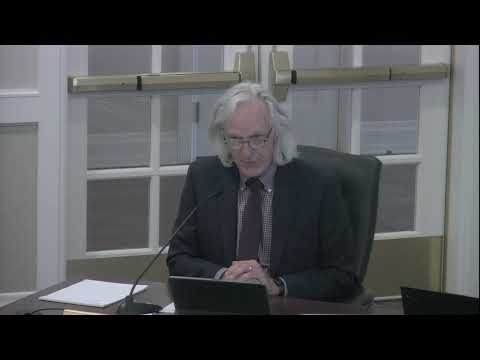
Saint Helena — City leaders and residents on Tuesday reviewed a nine‑month efficiency and business transformation study from the Blackberg Group and discussed next steps to implement its recommendations.
The study, presented by Keith Faucet, the Blackberg Group’s project manager and lead consultant, summarizes a current‑state analysis based on a 23‑question employee survey (53 responses), 36 structured interviews and document and data reviews. Faucet told the council the report highlights weak management systems and governance documentation, uneven organizational maturity across departments, and opportunities in talent management, process re‑engineering and information systems.
“Many of the ideas and recommendations … can serve as a foundation for change, improvement and transformation of the city’s operations,” said Mr. McCann, who introduced the item to the council. He and the consultants emphasized the report did not find evidence of fraud, but that the lack of robust controls elevates risk and warrants a fraud, waste and abuse assessment.
Why it matters: Blackberg recommended a phased transformation roadmap and a formal city strategic plan that would explain not only goals but “how” the city will achieve them — from staffing and asset needs to timelines and metrics. The consultants identified several near‑term priorities, including hiring senior HR and IT management, creating an executive dashboard for situational awareness, and exploring a public‑works long‑term strategy.
Key findings and recommendations
- Current state: Blackberg reported limited situational awareness across departments and a low level of organizational maturity; staff frequently equated success with the absence of complaints, which the consultants flagged as a sign of reactive operations rather than systematic quality management.
- Governance and systems: The firm found governance practices that are inconsistent and often not documented or cascaded into processes. It recommended centralizing management systems, better documentation, and a scaled approach to IT architecture (TOGAF) so systems work together rather than in silos.
- Staffing and talent: The report recommends a senior HR manager and an IT manager to build talent pipelines and mature processes. Faucet said executive salaries appear above peer averages for jurisdictions under 10,000 residents and that some savings (the report estimated nearly $600,000 over time) could come through attrition and redeployment of staff when appropriate.
- Fraud risk: Faucet and staff both stressed the study did not identify fraud, but they recommended a targeted fraud, waste and abuse engagement to reassure the public and tighten controls.
Public reaction and council next steps
More than a dozen residents spoke during the public comment period. Gary Rose urged a dedicated change manager and an independent oversight role, telling the council “oversight is mentioned in the report 76 times and trust is mentioned 59 times.” Chris Warner, acting chair of the finance committee, praised the council for commissioning outside advice and offered the committee’s forthcoming review of financial recommendations.
Other residents emphasized the need to tie any strategic planning to the city’s General Plan, to increase town‑hall style engagement, and to address water and wastewater maintenance that past comments and the report describe as deferred.
Council members responded that staff will return with a recommended implementation approach. Mr. McCann said staff plans to identify near‑term items that can be advanced immediately, propose how to use consultants for specialized work (for example, change management and fraud assessments), and bring a staged plan back to the council for approval and community input. Several council members suggested monthly check‑ins and consideration of an oversight or advisory body to track progress.
What was not decided
The council did not vote to adopt any part of the report as policy or authorize a program manager at this meeting. The only formal vote recorded at the start of the session was the unanimous adoption of the meeting agenda.
What’s next
Staff will develop an implementation plan and return to the council with recommended steps, consultant authorizations (if needed), and opportunities for public engagement, including town‑hall events. The council discussed regular updates so the work does not stall and the community can follow progress.
Quote selections
“There's no fraud among staff in the different departments,” Mr. McCann said, adding that the study “notes that with the lack of current or robust systems and controls, the environment for fraud or waste or abuse is heightened.”
Keith Faucet said the strategic plan the firm recommends must do more than list goals: it must show “how you will achieve those items.”
Gary Rose, a resident, urged independent oversight: “A change manager should be the first step … independent oversight is absolutely required.”
Ending: The council closed the special meeting after agreeing staff would return with a staged approach that balances in‑house work and consultant support, and after citizens urged clearer oversight, more community engagement and faster attention to infrastructure needs.