Get Full Government Meeting Transcripts, Videos, & Alerts Forever!
Get email alerts on the Municipal Budget topic
No spam. Unsubscribe anytime.
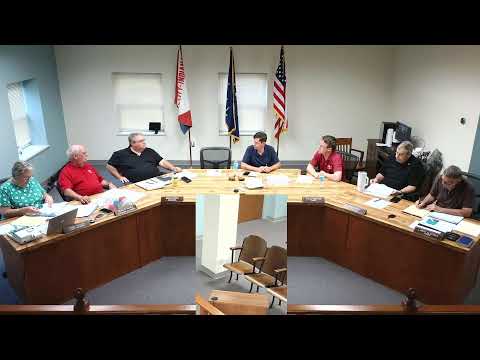
Tell City council trims paving, reallocates riverboat funds and cuts shelter support amid county dispatch dispute
Summary
Facing a potential county shortfall in EMS/dispatch funding, Tell City council approved a package of short-term cuts — including a $90,000 reduction to street and alley maintenance and a $48,000 reduction in general-fund support for the animal shelter with a $10,000 riverboat offset — while staff pursues negotiations with the county.
Tell City council voted to reduce its street and alley maintenance appropriation from $100,000 to $10,000 and to cut $48,000 in general-fund support for the local animal shelter, approving a $10,000 riverboat-fund transfer to partially offset the shelter loss. The moves came as city staff and council grappled with an uncertain county contribution for EMS/911 dispatching that left the city's 2026 budget short unless it makes immediate cuts.
Connie, the city clerk/treasurer, told council she must file the initial budget form the next day and laid out three revenue scenarios to show the impact of different county payment levels. "I have to submit my budget form, my form three today," Connie said, explaining that the filing deadline constrains the council's immediate options. She presented estimates showing that if the county pays only its minimum proposed amount the city would face a significant deficit and need cuts totaling roughly $185,000 under one scenario; a higher county contribution would reduce that shortfall.
Council member Larry offered the paving cut as a direct way to produce $90,000 in savings, moving to reduce the street-and-alley maintenance line to $10,000; Philip seconded the motion, which carried on a voice vote. Gerald then moved — and Larry seconded — to remove $48,000 of general-fund support for the animal shelter and to create a $10,000 riverboat-fund line for shelter support; that motion also passed on a voice vote. Council did not record a roll-call tally in the transcript; minutes show the votes were taken by voice and motions were carried.
Several council members warned about service and political consequences. "If we cut paving that much, our alleys aren't going to get paved like they used to be," one council member said, cautioning that residents would react to reduced street maintenance. Deputy and patrol staffing costs and pension impacts were also discussed: raising patrol pay narrows the gap between newer officers and long-service officers but increases future retirement payouts, a point Connie and other members noted when modeling raises.
The budget discussion centered on an unresolved question: how much the county will reimburse Tell City for dispatch services. Council members described a long-term trend of increased county contributions since 2019 but said the county now faces its own revenue limits. "We could try to make this work for two years," one council member said, urging a bridge plan while the county pursues broader revenue options such as local-option income tax changes and other county-level decisions.
Council agreed to file the budget with the submitted numbers (including the adopted cuts) and to return for additional appropriations or revisions if the county later increases its payment. Connie said she would continue to refine revenue estimates before the public hearing and final adoption scheduled for Oct. 20. Council members also pledged to meet with county leaders and to use a mayor's round table to press for county funding to reduce the local burden.
The council's actions leave the city operating with a near-zero ending balance under the adopted scenario; staff said the city can still make additional appropriations if revenues change but warned that doing so would require public notices and additional administrative steps. Council members repeatedly framed the cuts as a last resort: several said they wanted the county to shoulder the dispatch expense because, they argued, dispatch is primarily a county service.
The council's short-term moves do not conclude the dispute with the county. Members said they will continue negotiating and will explore a multi-month bridging strategy, potential revenue changes, lease adjustments (including a suggestion to raise Ivy Tech's lease), asset sales, and other expense shifts before the final budget adoption.