Get Full Government Meeting Transcripts, Videos, & Alerts Forever!
Get email alerts on the Myopia Maintenance Facility topic
No spam. Unsubscribe anytime.
Myopia Hunt Club seeks 11,128‑sq‑ft maintenance facility; Hamilton board continues stormwater hearing
Summary
Myopia Hunt Club presented plans for an 11,128‑sq‑ft maintenance building with an environmental center, above‑ground fuel tanks and on‑site treatment for washdown water; the Hamilton Planning Board agreed to a $6,000 engineering peer review and continued the site‑plan and stormwater hearing to Feb. 3, 2025.
The Hamilton Planning Board continued the public hearing on a site plan review and stormwater management permit for an 11,128‑square‑foot maintenance facility proposed by the Myopia Hunt Club at 435 Bay Road.
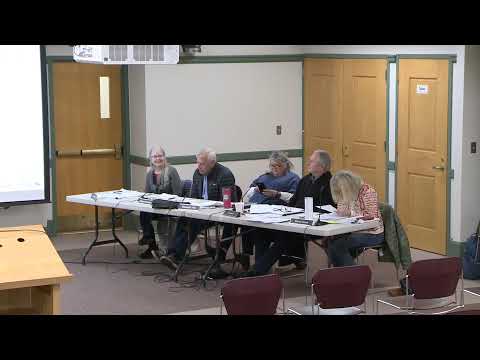
At the Jan. 13 hearing, project architect Rob Olsen and Hancock Associates civil engineer Anthony Donado described a central facility that would consolidate the club’s maintenance operations, move equipment indoors, and replace improvised outdoor storage. “The purpose of this project is to consolidate the club’s maintenance operations which are currently headquartered in a brick building … and integrate them into one facility,” Olsen said during a slide presentation.
The applicant said the project would remove an existing underground fuel storage tank and install fire‑rated, above‑ground double‑wall tanks beneath a canopy; the team stated the tanks would hold 1,500 gallons of gasoline and 1,500 gallons of diesel and include containment and fire protection. The proposal also includes an on‑site “environmental center” to store fertilizers and pesticides in sumps with containment, a covered washdown bay tied to a closed treatment and recycling system, and runoff controls consisting of catch basins with sumps, a water‑quality device and a grassed surface pond so post‑construction discharge rates do not increase.
Jonathan Wilbur, identified as the club’s facilities director, said the club already conducts annual testing around the tank area and that removal will include sampling; the applicants said they do not believe contamination exists but that removal includes standard testing and reporting protocols.
Neighbors at the hearing raised concerns about visibility, mature trees along the marsh edge, early‑morning noise from consolidated vehicle activity, and fire risk from moving fuel tanks above ground. Abutter Kathy Lenoy of 66 Homestead Circle told the board she supported consolidation but urged preservation of the mature trees that buffer the marsh and worried that centralizing equipment could increase early‑morning noise. Tom Dowley of 60 Margaret Road asked whether relocating fuel above ground would raise fire risks; the applicant replied the proposed tanks are double‑wall, fire‑rated and that the dispensing area has engineered containment and fire suppression similar to commercial fuel stations.
Planning staff told the board an engineering peer review estimate is $6,000 ($4,000 plan review, $2,000 contingency) and could be completed in roughly two weeks. The board voted to continue the public hearing for both the site plan and stormwater management permit to a date certain, Feb. 3, 2025, to allow the peer review and applicant revisions. The motion to continue was moved and seconded and a roll‑call assent was taken by board members on the record.
The application packet and supporting materials remain on file with the Hamilton Planning Department; the public notice cited review under Mass. Gen. Laws ch. 48 § 9, Hamilton zoning bylaw § 10.6 and the town bylaws. The board asked that the applicant complete the town’s stormwater submission checklist and that the peer‑review engineer focus on stormwater analysis and on the proposed containment/treatment systems. The hearing remains open and is scheduled to reconvene on Feb. 3, 2025.