Get Full Government Meeting Transcripts, Videos, & Alerts Forever!
Get email alerts on the Public Safety topic
No spam. Unsubscribe anytime.
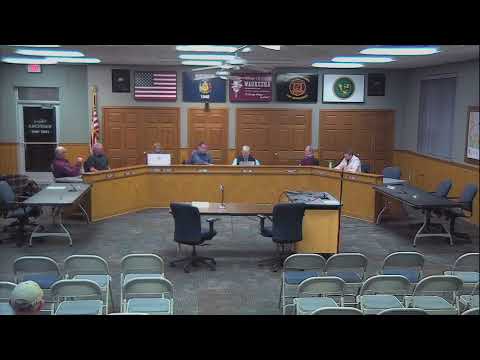
Village divided over fire‑station remodel: board weighs scheme B, scheme C and possible referendum
Summary
Board members debated two major options for the fire station—scheme B (major remodel/additions, estimate ~ $4.6M) and scheme C (larger addition, estimate > $5.3M)—and whether to seek voter approval. Some members favored moving forward with scheme B immediately; others said a referendum is appropriate for a larger scope. No final decision was reached; a workshop was proposed to refine costs and a path forward.
The Village Board engaged in a lengthy debate on March 12 over how to address an aging fire station, weighing a remodel/addition approach (scheme B) against a larger addition/renovation (scheme C) and whether to submit a funding request to voters via referendum.
Design consultants prepared two concept options: scheme B, a substantial remodel with additions that the village estimated in the meeting materials at roughly $4.6 million (including some optional items); and scheme C, a larger programmatic addition with an estimated cost in the packet near $5.3 million before optional deletions. Board members and the designer discussed approaches to hold the project under the statutory referendum threshold (the village’s current threshold was described as roughly $4.4 million based on equalized values) by setting a firm design budget and asking the designer/contractor to select materials and systems to meet that cap.
Proponents of immediate action argued the village has delayed needed improvements for many years and that proceeding with a board‑authorized design budget could bring a new or remodeled facility online sooner (with a potential construction window in 2027 if the village proceeds without referendum). Opponents urged a referendum for a larger scope, noting the significant community cost and that a vote would allow residents to decide the size and scope of the project; they also warned of inflation and bid escalation if the village delayed a vote.
Fire department priorities driving the project include new sleeping quarters to support staffing and improved NFPA‑compliant decontamination and circulation to protect firefighter health. Board members also discussed generator scope, roofing work for adjacent village buildings, and whether to phase rooftop or campus improvements separately.
Roger, a board member who argued for moving forward without voter approval, said a locally constructed project now would produce a station the village could use “for 30 years” and argued that additional delay had eroded ability to recruit and retain medics. Other members favored further work on scheme C to determine whether cost savings could bring it under the referendum threshold; they proposed workshops and a targeted homework assignment to identify potential reductions rather than debating the full program again at a regular meeting.
No final decisions were made at the meeting. The board instructed staff and the designer to provide additional cost breakdowns and recommended a focused workshop to refine a preferred path—either (a) proceed with a design budget for scheme B and move ahead without referendum, or (b) develop a referendum plan for a larger scheme C should the board choose to present that to voters. The board noted that if a referendum is required, the earliest realistic construction timeline would likely shift into spring 2028 or later due to statutory and scheduling constraints.
The board will schedule follow‑up work sessions to narrow scope and provide the public with clear cost and timeline options before making a formal decision.