Get Full Government Meeting Transcripts, Videos, & Alerts Forever!
Get email alerts on the Budget Capital topic
No spam. Unsubscribe anytime.
Town council approves budget; Farmington schools face $180,000 unreimbursed cost on IR flooring project
Summary
Superintendent told the board Town Council approved the district budget but said the IR elementary flooring project will require asbestos abatement that does not qualify for state priority‑2 reimbursement, leaving an estimated $180,000 unreimbursed from an ~$800,000 project.
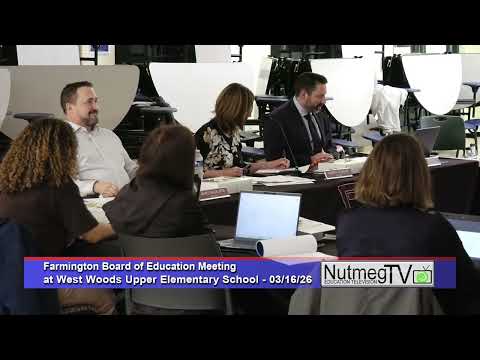
At the March 16 meeting the superintendent reported that Town Council has approved the board‑adopted operating and capital budgets and that they will proceed toward referendum. He described a problem with the IR elementary school flooring project: during preliminary work the district discovered asbestos that requires abatement.
The superintendent explained that the state’s priority‑2 reimbursement criteria are strict and, because the abatement does not create an immediate code violation, the district’s abatement costs do not meet eligibility. As a result, the district expects to be unable to recover roughly 31% of the abatement portion—"it would have probably been about $180,000 that we were looking to get reimbursed from approximately an $800,000 flooring project," the Assistant Superintendent of Finance and Operations said.
Board members asked about alternatives and timing. Officials said moving the project to a priority‑1 alteration grant could allow reimbursement but would require applying in an annual cycle and likely delaying the work by about a year, risking escalation in costs and conflicts with summer programming and planned HVAC work. The district said it will pursue internal capital reallocation, efficiencies and possible transfers from food‑service or other lines to absorb the unreimbursed amount while maintaining planned projects.
The board approved the financial statement for January 2026 during the meeting; the assistant superintendent reported a year‑to‑date potential balance of about $92,000 and positive spending trends. He also noted self‑insurance funds were trending approximately $300,000 below projection year‑to‑date; retained surplus would bolster the district’s self‑insurance reserves.
What happens next: the district will work with town council on capital adjustments and aim to complete the IR flooring work this summer while containing escalation risk; the board will monitor budget encumbrances and year‑end options (spend, return to town, or non‑lapsing account up to policy limits).