Get Full Government Meeting Transcripts, Videos, & Alerts Forever!
Get email alerts on the K 12 Curriculum topic
No spam. Unsubscribe anytime.
Farmington board approves first readings for seven new high‑school courses including AP and dual‑enrollment options
Summary
The Farmington Board of Education approved first readings for seven proposed high‑school courses for 2026‑27—including Yukon ECE dual‑enrollment classes, new AP offerings and a Project Lead The Way biomed course—so they may run as pilots pending enrollment and successful summer curriculum work.
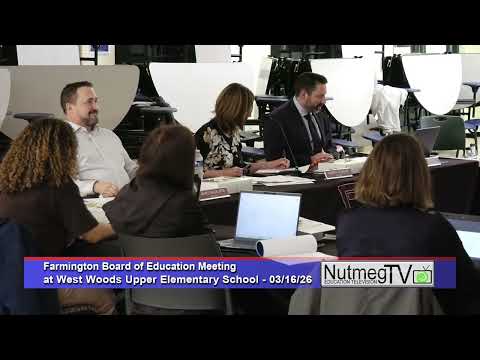
Director of curriculum Eric Martin presented seven proposed courses to the Farmington Board of Education on March 16, saying the proposals "go into the program of studies as potentially being offered pending board approval." The board voted to approve a first reading of the courses, which will run as pilots in 2026‑27 if enrollment and summer curriculum preparation meet district expectations.
The courses include Yukon ECE Math for Business & Economics (a half‑credit, University of Connecticut transferable dual‑enrollment course aimed at juniors and seniors); Principles of Business Careers (a survey for 9th–10th graders to introduce business pathway options); AP Business with Personal Finance (new College Board offering that also satisfies the state's half‑credit personal‑finance requirement); AP Cybersecurity (an advanced addition to the computer‑science pathway); Project Lead The Way biomedical interventions (the third year in the biomed pathway); Yukon ECE Popular Music and Diversity in American Society (a non‑performance dual‑enrollment music history/genre study); and Video & Media Production (lab‑based production instruction using recently procured digital production equipment).
Martin told the board these proposals have passed building‑level review and the curriculum subcommittee and are timed to support the high‑school course‑selection process already underway. He described the pilot process: teachers hired for the course perform summer curriculum work to create a stage‑one syllabus, teach the pilot year, then finalize curriculum during a second summer ahead of full implementation.
Board members asked about success criteria and capacity. Martin said, "Student feedback surveys, enrollment, AP exam rates and teacher impressions" guide decisions about whether a pilot becomes permanent. The board also discussed prerequisites, enrollment thresholds and the possibility of offering some courses on alternating years if demand or staffing requires.
The first reading vote clears the courses to be listed in the 2026‑27 program of studies; individual courses will only run if they meet the district's enrollment and staffing thresholds. The board approved the first reading motion at the meeting.
What happens next: teachers will develop pilots this summer and the district will report enrollment data in October; final approval for permanent adoption will return to the board after pilot evaluation.