Get Full Government Meeting Transcripts, Videos, & Alerts Forever!
Get email alerts on the Budget topic
No spam. Unsubscribe anytime.
Georgetown ISD budget workshop lays out $4.2M pay proposal and the risk if a local tax measure fails
Summary
At an April 7 workshop trustees reviewed a budget forecast showing a proposed compensation package that would cost an estimated $4.2 million plus $2.0 million to cover medical increases; district staff said the package would create a roughly $5.6 million shortfall if a local tax proposal (referred to in the meeting as a "vader") does not pass.
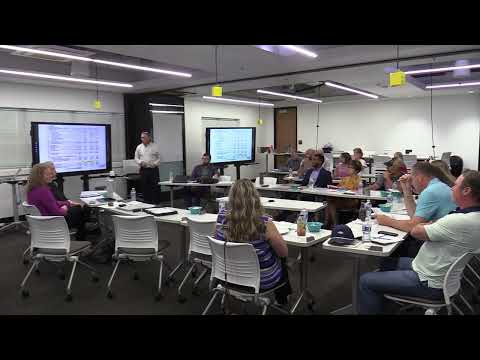
Trustees of Georgetown ISD were briefed April 7 on a budget forecast that balances current operations but ties a proposed compensation package to the outcome of a local tax measure the presentation repeatedly called a "vader." The board's budget presenter, Kenneth, told the trustees the district currently projects about $169 million in revenue and $160 million in operating costs this year and is forecasting a $5.7 million addition to fund balance largely because of one‑time items.
The compensation recommendation staff will bring back for board consideration in May would combine market adjustments and a broad 2% raise, which Kenneth said the district has preliminarily estimated at $4.2 million, plus $2.0 million to cover projected increases in medical insurance so employees would not see a payroll reduction. "This would fund a 2% raise" and cover medical, Kenneth said during the presentation.
Nut graf: Board members pressed staff on how those raises would interact with local revenue choices. Staff modeled a scenario in which a voter‑approved tax increase — discussed throughout the meeting as a "vader" — would add revenue under a seven‑cent scenario; without that revenue, the district's compensation plan as presented would produce a multi‑million‑dollar deficit that trustees would have to address through delays, smaller raises, or additional local revenue.
Kenneth walked trustees through assumptions that drive the forecast: the district modeled modest enrollment growth (an additional 150 students next year was described as roughly $1.5 million in revenue because "every 100 kids is a million dollars"), an assumed statewide per‑pupil funding increase of 1.7% based on a seven‑year average, and NEIFA/startup revenue tied to opening new campuses. He emphasized the underlying message: "Bottom line... it's the same total revenue that we've been talking about before," and that the projections are sensitive to the local tax outcome.
Trustees and staff discussed contingency options. One trustee summarized the tradeoffs: "The thing that won't balance a budget is a pay increase without a VAT," noting that without new local revenue the district could delay raises, pare them back, or adopt a smaller initial increase (for example, a 1% placeholder) until revenues are clearer. Kenneth noted that some operational savings are modeled — such as triple‑tiering bus routes and an added contingency line — but said the proposed raises were priced as an ongoing cost that would remain in base salaries and benefits going forward.
Staff also highlighted one‑time items improving current fund balance: a property‑value audit and land sales that materially boosted this year's fund balance. Kenneth cited a property‑value audit figure and other nonrecurring receipts that helped the district end the year with roughly $42 million in fund balance under current forecasts. On debt service, staff told trustees they had met with the Williamson County Appraisal District and used a 10% increase in net taxable value to $26.1 billion to model tax‑rate interactions; the presentation also noted a planned marketing of about $90 million of 2024 bond authorization on 15‑ or 30‑year terms to test tax‑rate outcomes.
The board did not take a formal vote. The superintendent and staff will return with detailed compensation recommendations and the market‑adjustment analysis at the May meeting, including the options for phasing or conditioning raises on the outcome of any local tax proposal. No final decisions were made at the April 7 workshop.