Get Full Government Meeting Transcripts, Videos, & Alerts Forever!
Get email alerts on the Water Policy topic
No spam. Unsubscribe anytime.
Council debates county 'ultra water efficiency' standards and developer incentives
Summary
Council members and staff discussed a conservancy‑district program that would cut district impact fees from about $17,000 to $11,000 for new developments that adopt strict indoor/outdoor water limits (no pools, limited irrigation, an 8,000‑gallon annual cap); city staff said enforcement and legal remedies remain the conservancy district’s responsibility while the city would handle billing and reporting.
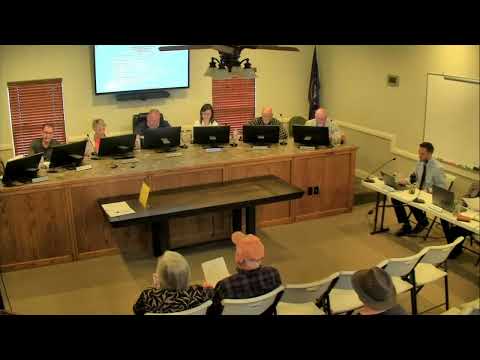
City staff and councilors spent a large portion of the April 1 meeting discussing the Washington County Water Conservancy District’s proposed Ultra Water Efficiency (UWS) standards and the local implications of adopting the district’s discounted impact‑fee program.
Program mechanics: Staff explained the district offers a reduced water‑development impact fee (roughly $11,000 versus $17,000) for developments that accept restrictive conditions: no residential pools, limited drip irrigation square footage and an effective annual allocation that was described as 8,000 gallons year‑round. Staff said the conservancy district proposed the discount; developers would capture the immediate fee reduction but the conditions are recorded against lots as covenants or easements.
Enforcement and administrative roles: City staff emphasized that the conservancy district retains the legal enforcement role for impact‑fee conditions and that the district has agreed in writing the city’s role would be limited largely to billing and reporting. Council members questioned how enforcement would work in practice, whether the city would become the “grass police,” and whether complaints or billing spikes would create additional staff workload; staff acknowledged an administrative burden for tracking and noted the district could pursue civil remedies where needed.
Economic tradeoffs and compliance: Staff estimated the water‑use surcharge regime could make up the fee discount over time for property owners who later install irrigated landscaping—roughly a six‑year payback projection depending on actual irrigation—and noted the incentive is intended to shift long‑term water demand rather than only create a short‑term price signal. Developers, who pay impact fees upfront and pass costs to buyers, are the primary short‑term beneficiaries of the lower fee.
Public comments and questions: Residents asked about who pays the fees, how watering day schedules work, and whether the city would consider positive incentives for low users. City and district representatives said the program targets new plats and that Firelight phases one and two were proposed for inclusion as batches rather than adjudicating eligibility lot‑by‑lot to reduce administrative complexity.
Next steps: Council did not adopt an ordinance or decision at the meeting; staff offered to return with the district’s legal language and written provisions for review so councilors could evaluate enforcement specifics and administrative commitments.