Get Full Government Meeting Transcripts, Videos, & Alerts Forever!
Get email alerts on the Water Infrastructure topic
No spam. Unsubscribe anytime.
Ash Creek district outlines Confluence Park reuse plant and regional water‑reuse plan
Summary
At the April 1 Toquerville council meeting, Ash Creek Special Service District representative Mike Chandler outlined the Confluence Park Water Reclamation Facility, described its aerobic granular‑sludge technology and Type‑1 reuse standard, and said commissioning and sewage cut‑in are expected in the coming weeks as part of a multi‑year regional reuse plan.
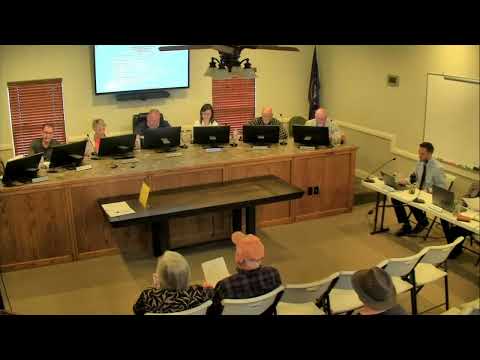
Mike Chandler, a representative of the Ash Creek Special Service District, told the Toquerville City Council on April 1 that the district’s Confluence Park Water Reclamation Facility is nearing operational status and will expand regional reuse capacity.
Chandler said the facility uses an aerobic granular‑sludge process—“the first of its kind in Utah, one of the first 20 in the U.S.”—and is designed to meet the state’s Type‑1 reuse standard so treated water can be used for residential irrigation, ball fields and parks. “We will treat it to the highest standard,” he said.
Why it matters: Chandler framed the plant as part of a larger strategy to stretch limited drinking supplies, protect groundwater and augment secondary water systems across multiple municipalities. He said current district flows into lagoons are about 2.5 million gallons per day and that projected regional buildout could approach roughly 20 million gallons per day, stressing the need for reuse infrastructure and interconnections with regional partners.
Key details and timeline: Chandler said the Confluence Park facility was visually and operationally designed to reduce odor, sound and visible piping in nearby neighborhoods. He told the council the district anticipates full clean‑water commissioning in about two weeks and that sewage “cut‑in” (starting to send wastewater through the new treatment process) should follow roughly two weeks after that. The plant is intended to produce water that meets Type‑1 reuse standards for nonpotable residential and institutional uses; advanced potable reuse remains a long‑term prospect.
Costs, technology and capacity: Chandler described the aerobic granular‑sludge technology as having roughly a 25 percent smaller footprint and consuming less than half the power of conventional plants, which he said reduces life‑cycle costs. He also said the district is planning future mechanical upgrades that may require bond financing; staff later noted a preliminary bond estimate for a mechanical facility in the neighborhood of $150 million and emphasized that interest‑rate uncertainty will affect final financing decisions.
Regional planning and dependencies: Chandler and city staff placed the Confluence Park plant inside a regional reuse strategy involving the Washington County Water Conservancy District and St. George Regional Water Reclamation Facility. The presentation described pipelines, ponds and interconnects—some already permitted or under construction and others several years away—and noted that local benefits (for Tokerville/Toquerville residents) will phase in over time as the conservancy district completes permitting and pipeline construction.
Council questions and follow‑up: Council members asked about timelines for reservoirs and when local residents can expect secondary reuse service; Chandler said residents should expect a phased timeline measured in years, not months, and that some benefits may arrive within a few years while full pipeline buildout could take longer. He also described programs to protect groundwater resources and reduce salt loads that could limit reuse options.
Next steps: Chandler closed by offering to answer technical questions and by noting ongoing permitting, construction sequencing and coordination with regional partners. The council did not take formal action on the presentation; staff follow‑up will supply more precise financing figures and construction schedules when available.