Get Full Government Meeting Transcripts, Videos, & Alerts Forever!
Get email alerts on the Municipal Finance topic
No spam. Unsubscribe anytime.
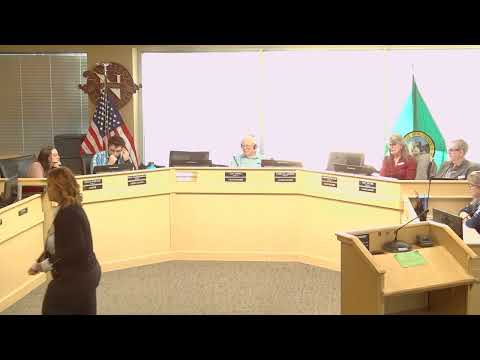
Newcastle council moves to form fiscal sustainability task force, discusses utility tax and other revenue options
Summary
In a study session the Newcastle City Council reviewed a draft charter to form a fiscal sustainability task force, discussed revenue options including a 3% utility tax, a 0.1% public-safety sales tax, a transportation benefit district and use of a REIT for streets, and agreed to return the item to a future regular meeting; no action was taken tonight.
The Newcastle City Council spent its study session reviewing a draft charter for a fiscal sustainability task force and weighing a menu of revenue and reserve options, but the council did not take any formal action.
City Manager Pingle told the council that "in the packet was a draft charter" for a task force staff would like the council to authorize and that staff wants clear direction so the panel does not "go in blindly." Council Member Jacobs asked a clarifying question about the local population model: "do we have any idea how many actual households encompass the 14,000 residents?" Jacobs said she wanted to translate per‑capita figures into household impacts when considering a utility tax.
Finance staff member Chris explained the modeling approach, saying that "every line item is treated separately," with some categories left mostly constant and others (salaries, benefits, insurance) escalated according to their own assumptions. Council members used the worksheet during the meeting to test scenarios, including a 3% utility tax example and a combination of revenue streams such as a 0.1% public‑safety sales tax, a transportation benefit district, a potential public‑safety levy starting at $0.10 per $1,000 of assessed value, and use of a REIT mechanism to fund street maintenance.
Several council members stressed reserve targets and timing. Staff noted the council's retreat goal—attributed to Council Member Vil Seenor—was to remain at or above a 17% general‑fund reserve (the session's "red line") through 2032. City Manager Pingle and other staff framed reserves as both a dollar amount and a percentage, noting the city currently has about $8 million in general‑fund balance on roughly a $13 million general fund. One council member urged caution about asking residents for too much, while others said a combination of modest near‑term measures and longer‑term planning could be preferable.
Council Member Paul urged more rapid action on forming the task force, saying the city has "talked in circles" on the issue and should begin the membership and study process this year so recommendations can be developed before larger budget deadlines. Other members suggested the task force could be appointed by the mayor with council confirmation, follow an application process like existing commissions, and be composed of five to eight members; council discussion included possible start and deliverable dates, with at least several months of work recommended to inform the 2027 or 2028 budget calendar.
Mayor Sherlock summarized the meeting's outcome: staff will return the item to a regular meeting (the council discussed bringing it back on April 21) with a recommended timeline and options for forming the task force. The council explicitly did not vote on or adopt the charter at the study session.
The council discussed next steps for public engagement and the mechanics of any ballot measures; staff noted that measures intended for the ballot require additional time. The study session closed with direction to bring the task force charter, suggested appointment process and a timeline back to a regular meeting so the council can take formal action if ready.