Get Full Government Meeting Transcripts, Videos, & Alerts Forever!
Get email alerts on the Education Policy topic
No spam. Unsubscribe anytime.
Lawrence district unveils sweeping teaching-and-learning plan: curriculum, assessments and CTE realignment
Summary
District leaders outlined a multi-year package of enhancements for 2026–27 focused on high-quality instructional materials, a balanced, curriculum-embedded assessment framework, expanded real-world learning and a consolidation of CTE pathways (19 to 13); staff will pilot an assessment platform and return to the board with costs and detailed proposals.
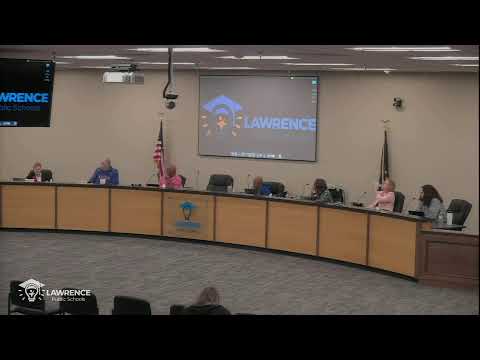
Lawrence Public Schools leaders presented a broad set of teaching-and-learning enhancements at the March 23 board meeting aimed at creating more consistent instruction, clearer career pathways and better, curriculum-aligned measures of student progress.
District presenters described a package that combines: adoption and implementation of high-quality instructional materials (HQIM) to reduce variability across classrooms; a balanced assessment framework built around curriculum-embedded unit assessments and a pilot assessment platform; expansion of real-world learning opportunities (internships, client-connected projects and work-based experiences); an individual plan of study (IPS) continuum using the Zello four-year planner; and a CTE (career and technical education) refinement that narrows funded pathways from 19 to 13 for 2026–27 to concentrate resources on programs with the strongest enrollment and postsecondary alignment.
"High-quality instructional materials are designed to be both rigorous and evidence-based," said Dr. Amaya, the teaching-and-learning presenter. She said HQIM frees teachers from recreating curriculum and enables them to focus on instruction and student relationships.
The district said it will prioritize K–8 implementation where gaps exist (the presentation named middle-school ELA and some science areas as spotty) and deliver targeted professional learning and job-embedded coaching. District staff noted that strong HQIM include "educative" materials that reduce reliance on external vendor PD over time and that teachers can lead implementation through professional learning communities.
On assessments, the district proposed using curriculum-embedded unit assessments as progress monitoring of standards rather than relying solely on separate benchmark days. Staff said a pilot of an assessment-and-analytics platform is underway at elementary levels and could expand for the 2026–27 school year so teachers can collect formative and summative data aligned to curriculum and produce an academic "return on investment" analysis for programs.
"This is progress monitoring of standards," a presenter said, describing the intent to collect actionable, curriculum-aligned data throughout the year instead of a single end-of-year summative test.
CTE refinement was described as a multi-year evaluation combining student voice, enrollment and outcome data and regional labor-market alignment. District staff said they will expand two middle-school introductory courses (Business Essentials and Introduction to Skills Trade) that feed seven of the 13 high-school pathways, and will add targeted courses within existing pathways (teaching/training, health science, diversified agriculture) to improve sequencing and increase concentrators and completers.
District leaders also said they will design differentiated diploma routes that define course sets, credit requirements and postsecondary expectations; detailed diploma proposals and related policy work are expected to return to the board in April.
Costs for districtwide HQIM adoption and the assessment platform were discussed as underway but "to be brought forward"; presenters said they are working to align existing resources and will provide concrete budget requests to the board. Several board members asked for sample materials and a board study session to see HQIM examples and implementation plans.
Implementation steps highlighted by staff included pilot work this spring, collaborative teacher networks to set assessment cadence, and expanded partnerships with local businesses and the district foundation to increase access to internships and community-connected projects.
The presenters emphasized that the work is designed to increase instructional coherence and equity across schools while giving students clearer pathways to postsecondary assets and careers.