Get Full Government Meeting Transcripts, Videos, & Alerts Forever!
Get email alerts on the Instructional Time Model topic
No spam. Unsubscribe anytime.
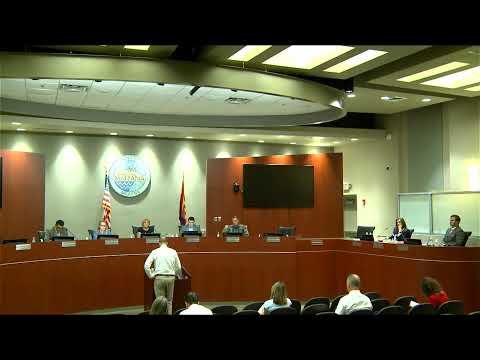
Marana Unified board approves instructional time model to recover state funding
Summary
The Marana Unified School District board approved a new instructional time model to offer remote and mastery-based options for students with extenuating circumstances and to recoup Average Daily Membership (ADM) funding, after a public hearing and questions about staffing and funding calculations.
The Marana Unified School District governing board voted to approve a new instructional time model that the district says will provide remote and mastery-based learning pathways for students who cannot participate in traditional schedules and will allow the district to recoup Average Daily Membership funding for services already provided.
The model was presented at a public hearing by Mr. Bogart, who described it as an option "to offer educational services to students who may not be able to participate in a more traditional MUSD setting while also generating ADM." The administration distributed a slide deck and a draft student contract and said the model would not change core curriculum delivery but would be offered on a case-by-case basis across district schools.
Board members asked how the district would respond if enrollment in the program rose sharply and whether additional staff would be hired. Administration responded that historically the number of eligible students is small and the district would address capacity needs as they arise. In response to a question about qualifying scenarios, administration said chronic illness and extended absences could qualify a student for an alternative schedule, with parental approval required.
Members also pressed the administration on the funding math after staff noted an example in which 86 students could have produced additional ADM-related revenue. Administration explained that partial ADM calculations apply because students who are absent for 10 consecutive days may be withdrawn and their earlier attendance cannot always be recaptured without the alternative model.
The board first removed the item from the table (it had been tabled in 2021) and then approved the instructional time model to begin in fiscal year 2627. The board’s motions carried with no recorded opposition.
The approved materials include an implementation process and a student contract; administration said more details on enrollment pathways and parent consent will be shared before the program begins.