Get Full Government Meeting Transcripts, Videos, & Alerts Forever!
Get email alerts on the Budget Adoption topic
No spam. Unsubscribe anytime.
Rainier School District budget committee approves 2026–27 proposed budget and sets tax rate
Summary
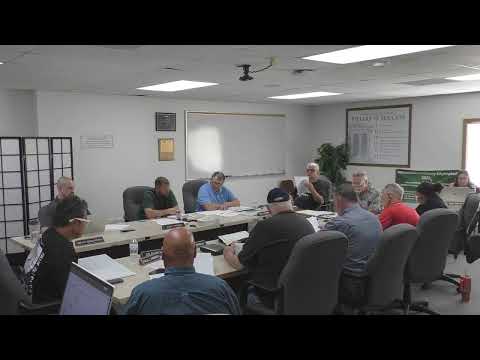
The Rainier School District budget committee approved a proposed 2026–27 budget totaling $19,772,627.92 and set a tax rate of $5.436 per $1,000 assessed value after clarifying questions about unemployment projections, grants and athletics funding; the motion passed on a voice vote.
The Rainier School District budget committee approved its proposed fiscal 2026–27 budget and set a tax rate at $5.436 per $1,000 of assessed value following a line-by-line review and a brief procedural discussion.
Committee member (Speaker 5) moved to "approve the Rainier School District budget for 2026–27" and read the proposed fund totals: general fund $13,259,085.84; special revenue funds $4,350,697.08; debt service $1,677,500; capital projects $256,914; agency funds $228,431; for a total of $19,772,627.92. After committee members identified a rounding display issue in the packet, staff confirmed the corrected figures and the motion was seconded and carried on a voice vote.
Why it matters: the committee’s approval finalizes the budget committee’s recommendation and sets the fiscal parameters — totals and the tax rate — that will be presented for the district’s next procedural step. Staff told the group the district will show the packet to the board and that, because the committee approved the budget, an extra June budget work session was not required.
What the committee debated: before the vote members and staff spent substantial time clarifying line items that could be misread in a rolled-up budget view. Staff highlighted how compensation and benefits are often split across funds and grants, which can obscure the total employer cost for a single position. For example, staff used one FTE to illustrate total cost—roughly $125,000 when salary and benefits are combined—so members understood why small salary lines do not capture total district expense.
State reconciliation and reserves: staff also told the committee of a state May Revise reconciliation requiring the district to return about $438,000 based on updated audits and local revenue estimates. Staff said the district has the funds to cover the reconciliation and outlined reserve and transfer adjustments used to smooth the impact.
Next steps: with the committee vote concluded, staff said the budget will move forward for the next scheduled hearing tied to the board meeting on June 8 at 6 p.m.; committee attendance at that board hearing was discussed. The motion carried by voice vote.