Get Full Government Meeting Transcripts, Videos, & Alerts Forever!
Get email alerts on the Encampment Response topic
No spam. Unsubscribe anytime.
Consultants offer rapid encampment-to-housing model; some members urge more lived-experience and trauma services
Summary
Clutch Consulting, backed by Community Solutions, presented a direct-to-housing encampment-response model that pairs outreach with landlord specialists and 12-month subsidies. Members praised the approach but raised concerns about pace, inclusion of people with lived experience and long-term supports.
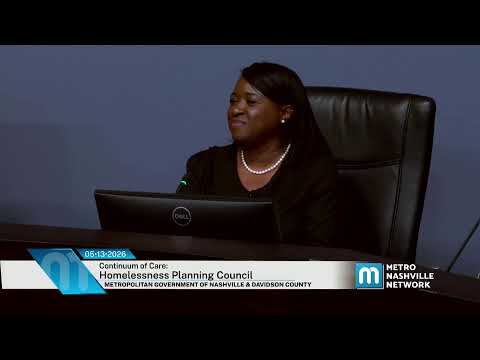
Mandy Chapman of Clutch Consulting presented a rapid encampment-response approach to the Homeless Services Planning Council, describing a model that brings rehousing teams and landlord specialists directly into encampments and aims to move people into lease-based apartments with 12 months of subsidy and stabilization services.
Chapman described prior city work—including Houston’s multi-year effort—and said the formula produced significant reductions there. "We were able to realize a 60% reduction in homelessness and about a 70% reduction in unsheltered homelessness during that time," she said as an example of what the model can achieve when paired with shelter throughput and targeted investments.
Community Solutions is underwriting Clutch’s deployment to 10 partner communities for 2026, Chapman said, and Clutch is offering tools, HMIS training and system-modelling support; the consultative work through Dec. 2026 is covered by that partnership. Chapman said the program emphasizes co-design, clear workflows, dedicated landlord outreach and after-action reviews to refine implementation.
During questions, Jamie, who identified lived experience with homelessness, cautioned against an optics-driven rush to reduce visible unsheltered homelessness and asked how people with lived experience are incorporated. "How are we incorporating the experience of people with lived experience into the solution?" Jamie asked. Chapman responded that co-design principles and focus groups are integral to the model and that after-action reviews capture participant feedback.
Other members asked about longitudinal outcomes and returns to homelessness. Chapman said projects track returns for 12–24 months and that modeling tools can show expected inflow, throughput and revenue needs. She acknowledged that sustained local revenue is typically required for long-term scale after initial consulting support ends.
No formal decision was made. Council members praised the offer but requested that any local adaptation emphasize trauma-informed services, lived-experience leadership and clear plans for sustaining housing once initial subsidies end.