Get Full Government Meeting Transcripts, Videos, & Alerts Forever!
Get email alerts on the Budget And Staffing topic
No spam. Unsubscribe anytime.
Board debates state funding 'recalibration,' grade bands and staffing risks
Summary
Trustees spent a prolonged portion of the meeting unpacking recent state funding changes (Senate File 81), grade-band staffing models and long-term budget risks, warning of operational gaps outside restricted funds and urging continued legislative advocacy.
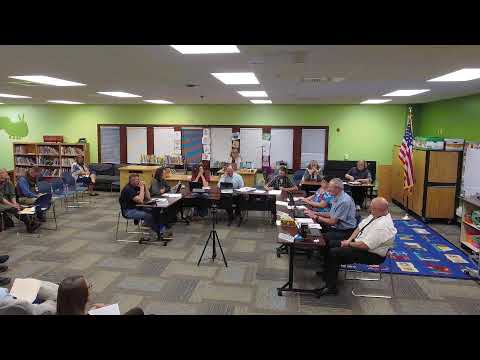
Board members devoted substantial time April 13 to the district’s response to state-level funding changes and the practical consequences for staffing and budgets. Administration outlined how the new recalibration model and Senate File 81 change the district’s funding 'silo' structure and impose constraints on how new money may be spent.
Superintendent Travis and business staff explained that the state’s model creates a designated pot of funds for certain personnel (the 'silo') while leaving roughly $700,000 of operational spending constrained outside that pot in the district’s projection. Trustees described how the law changes average-school-size triggers and requires grade-band alignment that may force schedule realignments and increased staff sharing between buildings to avoid creating unfunded positions.
"If we don't go to grade bands, then we're going to start having conversation about... you're only funded at .7 or .04," the superintendent said, stressing the need to align master schedules so staff can be shared across buildings instead of cutting positions. Trustees and administrators also noted local variations in regional cost adjustments (RCA) across Wyoming, which further complicate salary competitiveness and sustainment of raises.
Board discussion included potential unintended consequences: districts that funded fewer staff than the model assumes could face larger deficits or be forced into reductions in force; other districts have already used savings to bridge gaps. Trustees said they will continue advocating with legislators and that next fiscal-year changes or litigation could alter the model. The board scheduled a May 6 special meeting to work through budget and salary-schedule decisions.
The board framed the recalibration as both opportunity and constraint: extra funding for teacher salaries was welcomed, but trustees repeatedly cautioned that legal and coding requirements for the funding limit local discretion and require careful operational planning and possible scheduling changes to sustain services without triggering RIFs.